Nothing happens with an original idea if you first don’t prototype it. Especially if it’s about game mechanic that hasn’t been seen before. Without a prototype, it’s as worthless as the most derivative “idea”. One’s mental images and constructs that constitute an idea may look excellent while being tinkered with in their head, or even written down in a preliminary gdd. The reality check of a prototype is needed to discern between a useful idea and a misguided fantasy.
There’s also a question of what an original idea actually is. Most people have “original” ideas in the form of X but with/like Y, where X and Y are well known game or cultural reference points. They think a somewhat unusual combination of two usual things makes it an original idea. To me, those kinds of ideas are the epitome of derivativeness.
I observed that many game ideas that are tossed around are nothing more than mere story ideas, without much thought put into mechanics. In contrast to that, the only ideas I’d consider to be original game ideas are indeed the novel mechanics ideas. And they are pretty much worthless without prototypes.
You misunderstand me. What you’re describing are not what I mean by “good” ideas - just ideas. As you say, a stray thought about the backstory of a game won’t make a great game. And I agree that combining a couple of known mechanics is not particularly original, though there are plenty of games that have done this with great success - it’s not far from Poker to Balatro.
What I’m talking about could be something like the basic design of Tetris (if Tetris didn’t exist) - the mechanics, the look, the controls, the goals, and so on. That’s an idea worthy of at least being tested.
I see all this from a producer perspective, so I’m always very conscious of how much money (ie effort) it’ll take to find out if an idea is good or not
Ideas cost very little compared to development, so it’s much more efficient to develop ideas first, then put them into production when they’re as close to bullet-proof as one can get them… at least in a professional setting.
Well prototyping is a part of the idea development in my book, not a part of production. And, like it or not, prototyping requires programming. Even board game designs may benefit greatly from software prototypes. Your initial remark about this sounded like programming is not needed to develop an idea. I beg to differ. Prototyping is an essential part of idea development and it cannot happen without programming - hence there’s no quality idea development without programming.
We agree that prototyping is a necessary part of developing an idea, but I disagree that programming is necessary to do so. I’ve taken part in lots of game prototyping without a line of code, so I can say with confidence that it’s possible to do
The board game designs you mention - why build test software? If the end result is supposed to be a physical, multiplayer board game, why not test it as a physical, multiplayer board game? It’s quick, cheap, and as true to the format as you can get.
If you ask a graphic artist what’s important in a game, they’ll mention the visuals. If you ask a composer, they’ll mention the soundtrack. If you ask a programmer, they’ll mention the code. The fact is that coding is just part of the expression of a video game, just like camera work is just part of what makes a movie. We just happen to be on a programmer-heavy forum
Ideally, your game should be fun, or rather it’s core and basic game loop should be the hook. Story and art direction then serve the game be it by helping to suspend belief with narrative and world building.
Strip it all, the game loop remains.
Does it stand on its own?
If you can’t say yes, you could do worse than iterate until you can, resoundingly so.
By what means did you prototype then? You can only do so much in terms of rapid prototyping without an actual playable prototype.
Because you can do quick variations/balancing/whatifs and automated testing. That’s important as you can explore many more venues and afford not to worry much about going down the potential dead ends.
You can prototype/mockup all those things, and you should. Graphics and audio have their prototyping tools and methods. Gameplay has coding. Besides, code is what glues all other elements together. Games are software, code is not “just another part”. If you totally minimize multimedia in your game, you can still make a good thing. Not so much if you only use boilerplate code. The whole point of prototyping is do have a cheap testing playground for the design ideas.
It’s not obvious from my activity on this forum, but you could call me a graphics artist. I worked professionally in art direction/production roles on somewhat successful indie titles.
Anyway, to put it back on the track… I could see something like this happening only under substantial constraints:
Do it as a part of an existing jam with a very short deadline. Ideally a weekend, not more than a week.
Let the project be a remake or a spinoff of a lesser known but interesting retro game from 8-bit or early 16-bit era. Focus on executing the game’s original vision in a modern, polished way, possibly extending it or adding a twist. Think of what Crossy Road did with Frogger, only less ambitious. This way there will be a hard reference point everyone can agree on and most of the design foundations will already be there.
max 4 to 5 roles in a team, divided in a way that responsibilities don’t overlap:
– programming (gameplay/systems)
– programming (graphics/effects)
– art direction/production
– audio direction/production
– (optional) level design and testing
one of the members should be a coordinator and the final decision maker if some clashes arise.
no grandiose plans like “sell on steam”, “slay the spire slayer”, “my dream game”… none of that, not even a hypothetical mention.
no “ai”.
each member keeps the full copyright on parts they produced. No monetization or rights transfer can happen if all members don’t agree on the terms. (all this is highly unlikely but just in case…)
If the project is successfully finished, every member gets a beer, courtesy of Godot foundation.
In the case of more people being interested, better to form multiple teams than one large team.
If things work out, the team can eventually move to a more ambitious project. Otherwise, better luck next time.
Pen and paper, craft materials, board game tokens, coffee and imagination
Look, we just disagree. In my view, a video game is made of many parts, all of which are important - coding is one of those. A team of programmers could make “a game”, just like a team of people with cameras could make “a movie”, but in my humble opinion, I’d prefer watching one with a real crew behind it.
I think I’ll steer clear of this project for now… I’m too used to working professionally, for better or worse. How about adding a game designer role though? Someone’s going to have to think about the game aspect of the game
That’s a really inadequate analogy. Programmers are supposed to be experts in the field of software enginnering, which games are part of. “People with cameras” aren’t experts of any kind. Many great games were historically designed and made predominantly by programmers. Game systems design and software systems design both require similar modes of thinking, so there’s a good chance that a programmer would make a better game designer than an average person.
What project? There’s no project.
If you’re referring to my constraints list, note that I simplified it down to a remake, specifically to avoid having to deal too much with game design. Everyone thinks they’re competent in game design, so clashes are likely there. It’s not very productive to have design debates in a 3-day project.
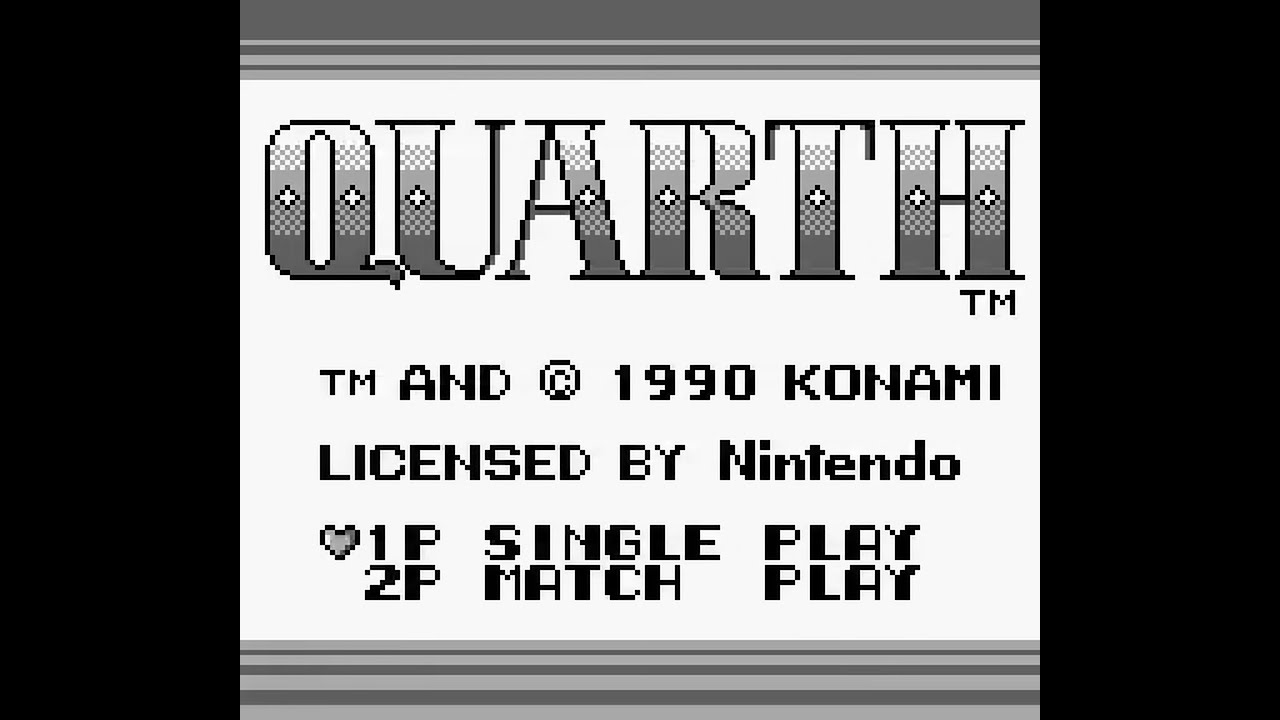
I think the idea to remake an old arcade-style game is good. Just the other day I was thinking about the game Quarth / Block Hole. A kind of tetris/space invaders bastard from the 8-bit era. Irregular shaped blocks fall from the sky. If they reach the ground, you lose. You can shoot cubes at them to shape them into rectangles and squares to make them dissolve. You can also get extra points and maybe extra lives and such things from making extra big squares.
If anyone is up for creating a clone over a short gamejam I’m up for it.
Just to get an idea of how it plays! I’m also up for other suggestions!
If you want to work on a team project Liblast has been fairly long running open-source Godot game.
If you want a game jam Godot wild jam happens regularly; To host something like a game jam requires a wide net, this forum doesn’t have all that many members at any given time. On top of finding people it’s hard work, you would have to be very committed to making it happen.