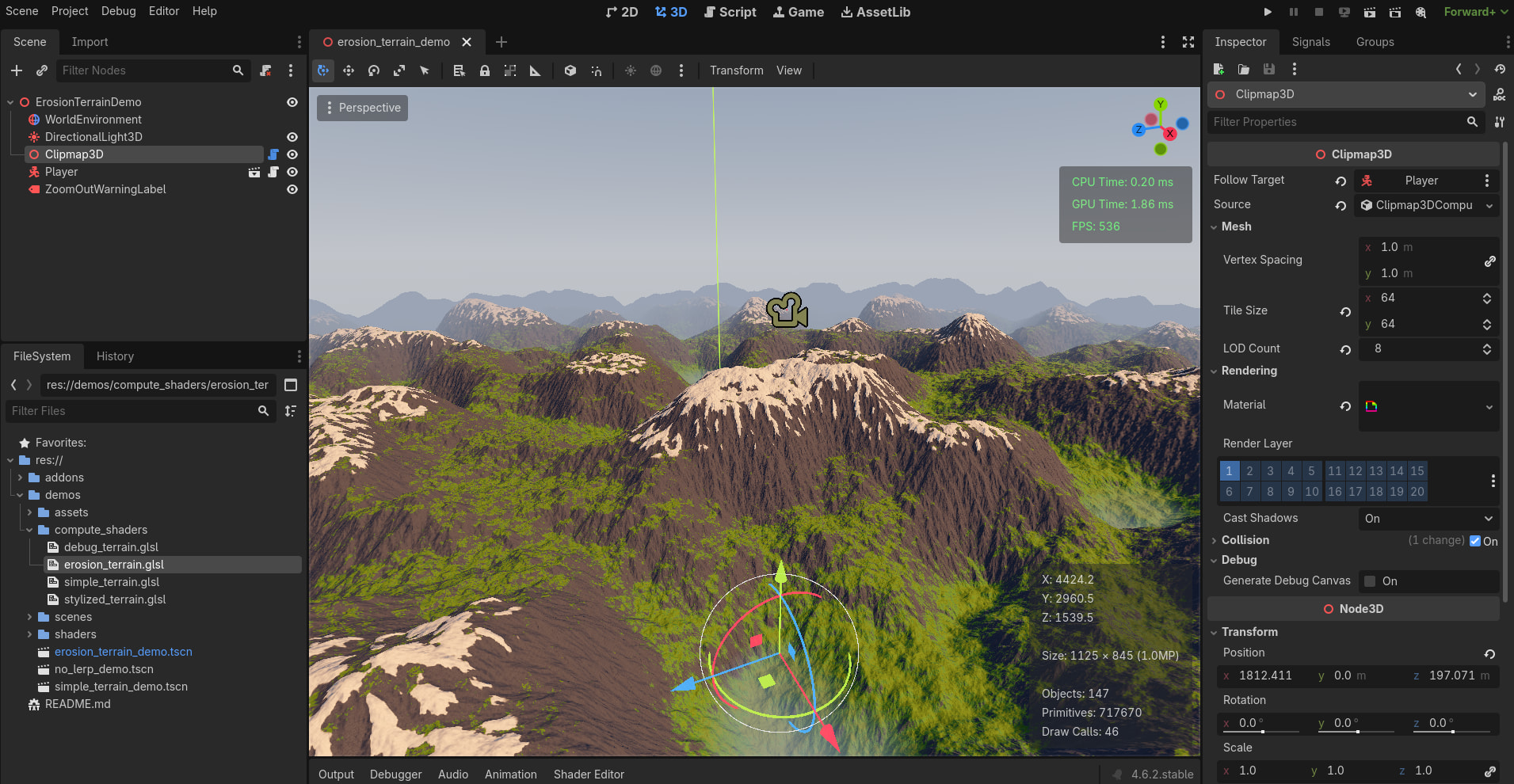
Implementation of Fast and Gorgeous Erosion Filter - runevision
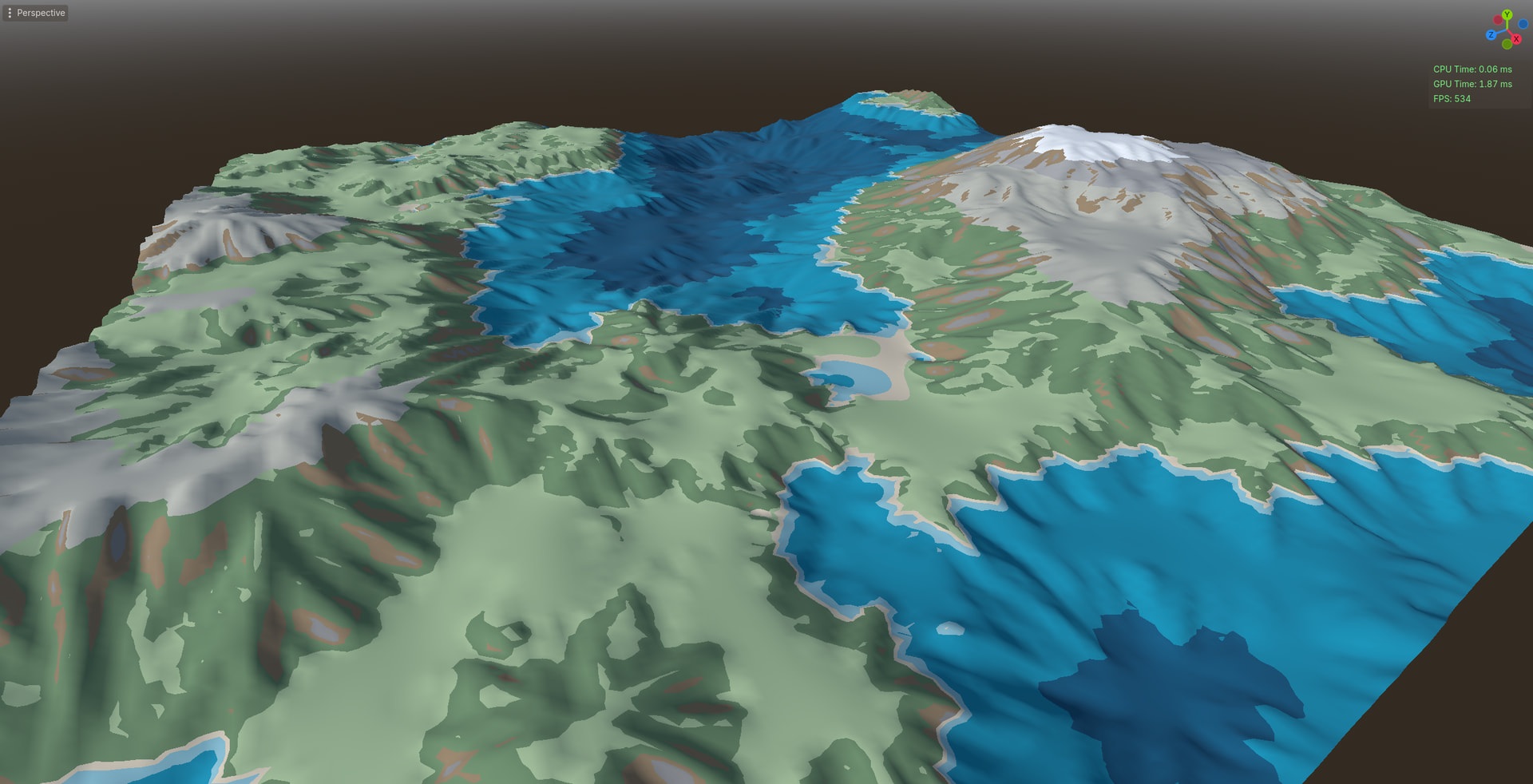
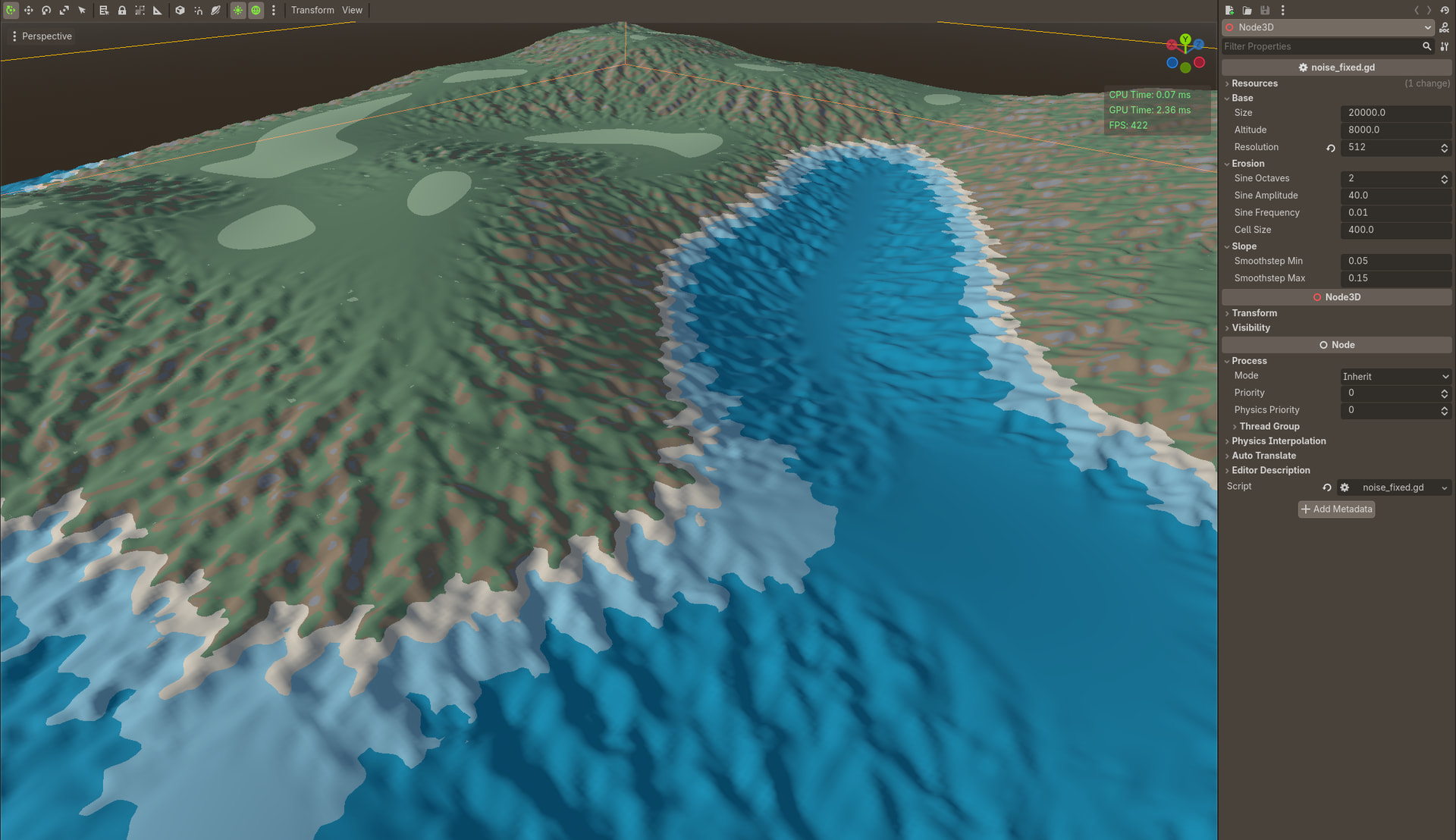
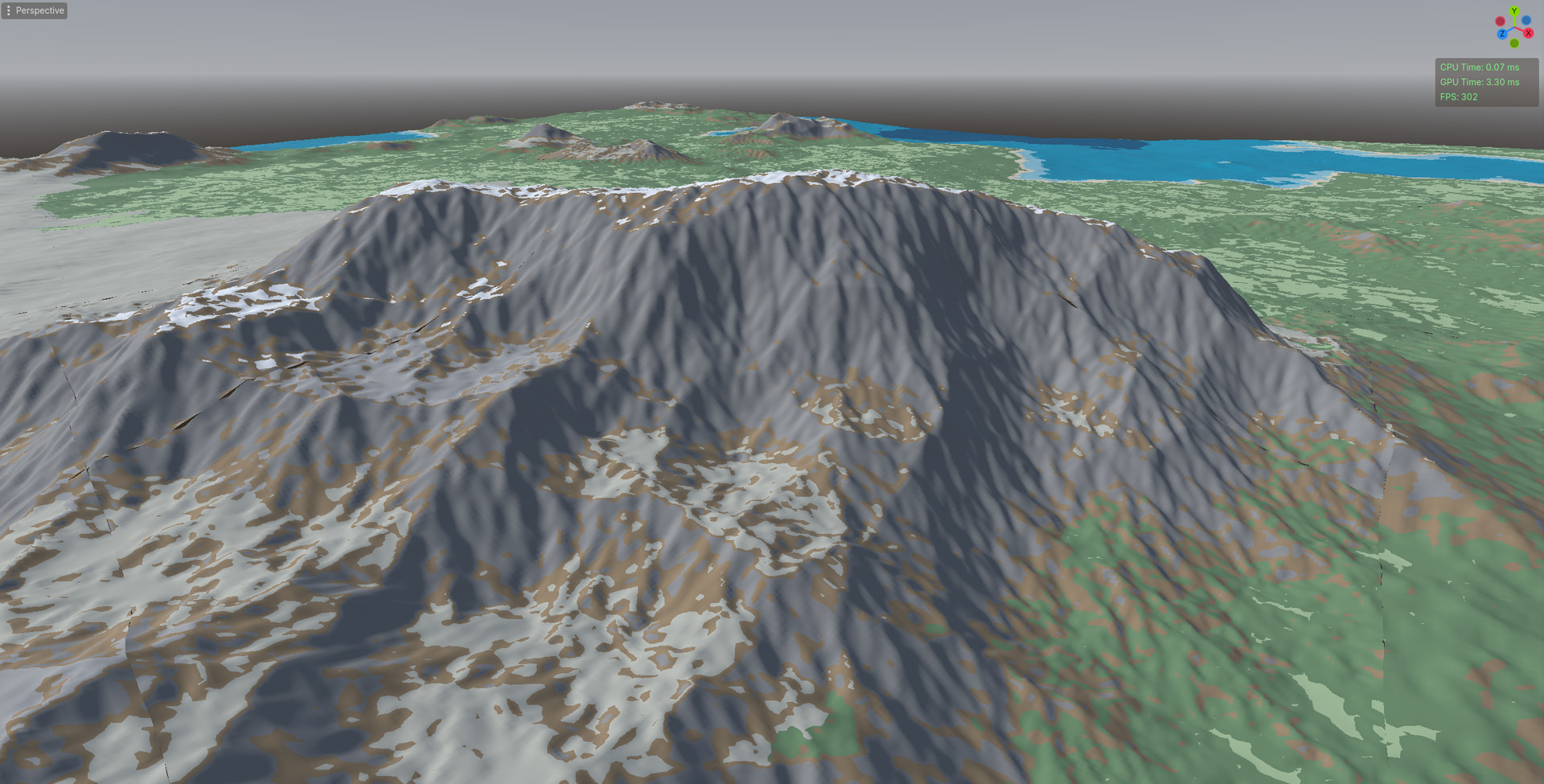
Its the basic implementation, I stopped at the fade for peak and valley.
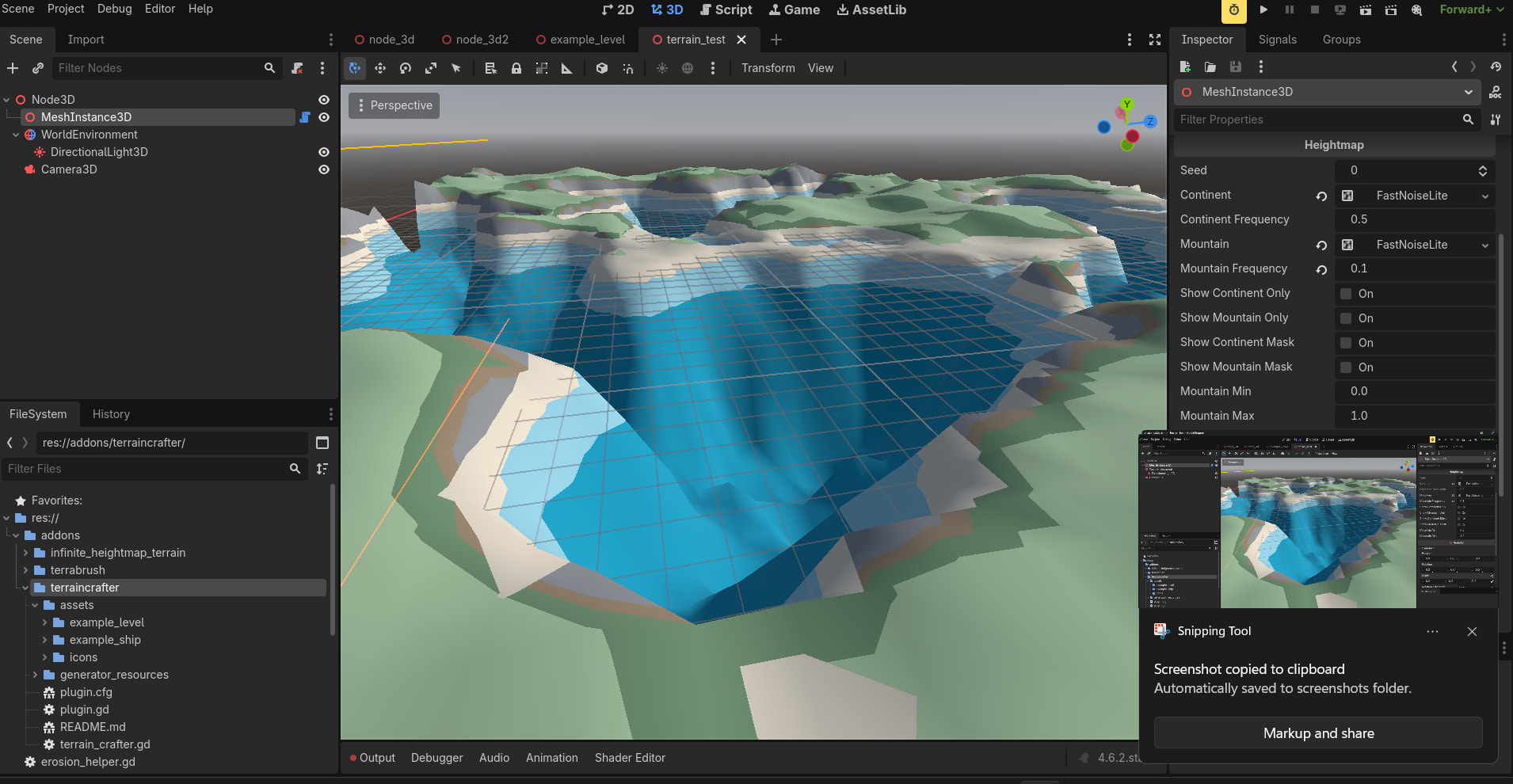
1.The script is attached to a Node3D.
2.You need to create a shader material and assign the shader to the material
@tool
extends Node3D

@export_group("Resources")
@export var material: ShaderMaterial = preload("res://terrain_erosion_test/terrain_erosion_test_material.res")
@export var noise: FastNoiseLite
@export_group("Base")
@export var size: float = 20000.0
@export var altitude: float = 8000.0
@export var resolution: int = 128
@export_group("Erosion (Single Pass)")
@export var sine_amplitude: float = 40.0
@export var sine_frequency: float = 0.01
@export var cell_size: float = 400.0
@export_group("Slope")
@export var smoothstep_min: float = 0.05
@export var smoothstep_max: float = 0.15

var height_data: PackedFloat32Array
var base_slope_mask: PackedFloat32Array
var grid_size: int
var mask_tex: ImageTexture

func _ready():
	for c in get_children(): if c is MeshInstance3D: c.queue_free()
	if !noise: return
	grid_size = resolution + 1
	height_data.resize(grid_size**2)
	base_slope_mask.resize(grid_size**2)

	# Initial Height Generation
	for z in grid_size:
		for x in grid_size:
			height_data[x + z * grid_size] = noise.get_noise_2d((float(x)/resolution)*size, (float(z)/resolution)*size) * altitude

	# Slope Mask Generation
	var step = size / resolution
	var img = Image.create(grid_size, grid_size, false, Image.FORMAT_L8)
	for z in grid_size:
		for x in grid_size:
			var idx = x + z * grid_size
			var g = Vector2(height_data[clamp(x+1,0,resolution)+z*grid_size]-height_data[idx], height_data[x+clamp(z+1,0,resolution)*grid_size]-height_data[idx])
			var m = smoothstep(smoothstep_min, smoothstep_max, g.length()/step)
			base_slope_mask[idx] = m
			img.set_pixel(x, z, Color(m, m, m, 1.0))
	mask_tex = ImageTexture.create_from_image(img)

	# Apply single erosion pass
	apply_erosion_pass()

	if material: material.set_shader_parameter("slope_mask_tex", mask_tex)
	create_mesh()

func apply_erosion_pass():
	var step = size / resolution
	var prev = height_data.duplicate()

	for z in grid_size:
		for x in grid_size:
			var idx = x + z * grid_size
			var m = base_slope_mask[idx]
			if m <= 0.001: continue

			# Calculate Gradient Tangent
			var g = Vector2(prev[clamp(x+1,0,resolution)+z*grid_size]-prev[idx], prev[x+clamp(z+1,0,resolution)*grid_size]-prev[idx])
			var tan = Vector2(-g.y, g.x).normalized()
			var w_pos = Vector2(x, z) * step
			var grid_c = (w_pos / cell_size).floor()
			var o_s = 0.0
			var o_w = 0.0

			# Neighborhood sampling (No octave scaling)
			for ny in range(-1, 2):
				for nx in range(-1, 2):
					var rng = RandomNumberGenerator.new()
					# Seeded by cell position and noise seed
					rng.seed = hash(str(grid_c + Vector2(nx, ny)) + str(noise.seed))
					var piv = ((grid_c + Vector2(nx, ny)) * cell_size) + Vector2(rng.randf(), rng.randf()) * cell_size
					var w = pow(1.0 - smoothstep(0.0, cell_size * 1.5, w_pos.distance_to(piv)), 2.0)
					if w > 0.001:
						o_s += sin((w_pos - piv).dot(tan) * sine_frequency) * w
						o_w += w

			if o_w > 0.0:
				height_data[idx] += (o_s / o_w) * sine_amplitude * m

func create_mesh():
	var st = SurfaceTool.new()
	st.begin(Mesh.PRIMITIVE_TRIANGLES)
	var step = size / resolution
	for z in grid_size:
		for x in grid_size:
			st.set_uv(Vector2(float(x)/resolution, float(z)/resolution))
			st.add_vertex(Vector3(x * step, height_data[x + z * grid_size], z * step))
	for z in resolution:
		for x in resolution:
			var i = x + z * grid_size
			for off in [0, 1, grid_size, 1, grid_size + 1, grid_size]: st.add_index(i + off)
	st.generate_normals()
	st.set_material(material)
	var mi = MeshInstance3D.new()
	mi.mesh = st.commit()
	add_child(mi)
	if Engine.is_editor_hint(): mi.owner = get_tree().edited_scene_root
shader_type spatial;

uniform sampler2D stripe_texture;
uniform bool show_stripes = false;
uniform float alt_coeff = 1.0;  // use this to compress altitude range
varying vec3 world_pos;
varying vec3 world_norm;

void vertex() {
    world_pos = (MODEL_MATRIX * vec4(VERTEX, 1.0)).xyz;
    world_norm = normalize((MODEL_MATRIX * vec4(NORMAL, 0.0)).xyz);
}

void fragment() {
    float y = world_pos.y;
    float flatten = dot(world_norm, vec3(0, 1, 0));
    vec3 color;

    float beach_line = 20.0 * alt_coeff;
    float tree_line = 1700.0 * alt_coeff;

    if (y < -1000.0 * alt_coeff)      color = vec3(0.00, 0.11, 0.23);
    else if (y <= -100.0 * alt_coeff) color = vec3(0.00, 0.31, 0.48);
    else if (y <= -20.0 * alt_coeff)  color = vec3(0.29, 0.59, 0.69);
    else if (y <= beach_line)         color = vec3(0.82, 0.71, 0.55);
    else if (y <= tree_line)          color = vec3(0.46, 0.63, 0.36);
    else if (y <= 2800.0 * alt_coeff) color = vec3(0.55, 0.55, 0.48);
    else if (y <= 3500.0 * alt_coeff) color = vec3(0.43, 0.43, 0.43);
    else                              color = vec3(0.94, 0.97, 1.00);

    if (y > beach_line) {
        if (flatten < 0.85)           color = vec3(0.30, 0.30, 0.30);
        else if (flatten < 0.90)      color = vec3(0.35, 0.25, 0.15);
        else if (flatten < 0.97 && y <= tree_line) color = vec3(0.18, 0.31, 0.16);
    }

    if (show_stripes) {
        float value = texture(stripe_texture, UV).r;
        ALBEDO = vec3(value);
    } else {
        ALBEDO = color;
    }
}
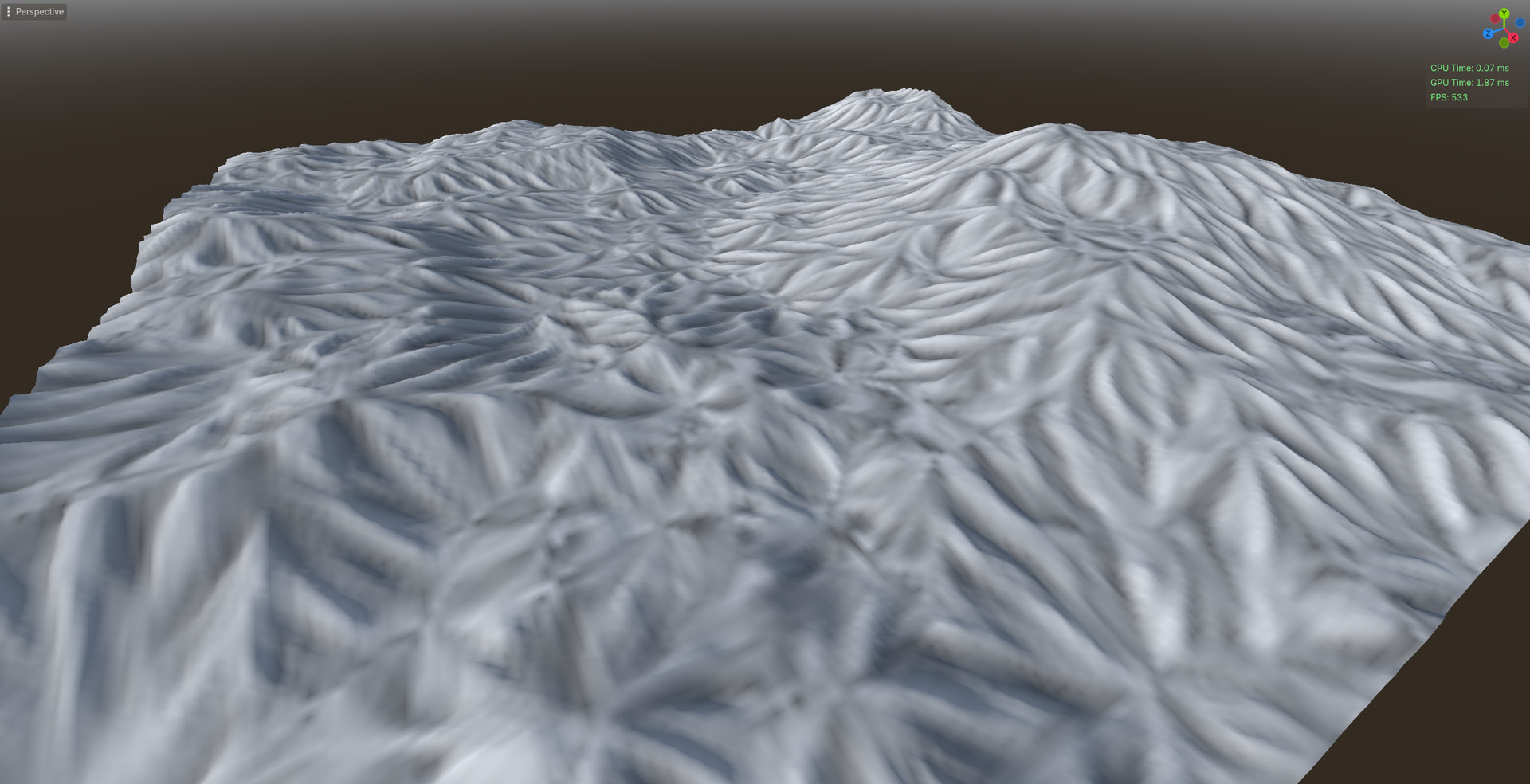
- You can visualize the stripes (set show_stripes to true).