After a brief analysis, I’ve decided to go with another open-source project. Thanks.
Hello, I’m a 3D artist and developer with experience in both Unreal Engine and Unity, and I’m also a Unity Certified Developer.
I’m considering creating something similar to MetaHuman for the Godot Engine, possibly called BetaHuman. Before investing too much time into it, I’d like to hear your thoughts from a practical Godot-user perspective.
To be clear, I’m still in the planning stage. I want to understand the real need first, then decide what to build next. Since this would be a side project I’d work on in my spare time outside my full-time job, I want to make sure it would actually be useful for the community.
Is something like this actually needed in the Godot ecosystem?
Would the Godot community benefit from a project like this, even if it grows slowly as a spare-time side project?
What should the target quality level be? Low-poly, mid-poly, or high-poly?
Should it ship with a ready-made animation library?
Should lip-sync be supported out of the box?
What would be “enough” for the wardrobe system? For example, would a small set of modular clothing pieces be useful, or would users expect a more flexible outfit/customization system?
What else?
My goal would not be to compete directly with MetaHuman in terms of realism, but to create a practical, production-friendly character system for Godot users, especially indie developers and small teams.
Well, your question already contains most of the answers.
Different projects require different levels of quality. I was thinking of creating a set of meshes with varying numbers of polygons for different scenarios.
In MakeHuman (which this is based on), there are 1,400 morphs. It’s an interesting question how long it would take one person to port all of that into the engine. But in any case, even if done as a full-time job, the time required wouldn’t be very reasonable.
Nope, it’s not needed.
I didn’t receive any donations at all for my tutorial, which served as the basis for this generator.
Humanizer (which also used my tutorial) didn’t receive any support or distribution.
Thanks! Great job with that. I hope it gets more attention in the future.
I think the hard part with open source is that expectations around support and monetization need to be kept to a minimum. My aim is to demonstrate my skills to potential employers or contractors while also contributing something useful to the community. Otherwise Unity Asset Store or Fab is a better target. You know, we all know some neo-capitalists think open source is cancer…
I plan to model every character and morph myself. Although I already have a small database of my own, it will definitely be more work than simply porting someone else’s morphs. That said, I’m pretty sure I could automate parts of the morph export process with AI if needed.
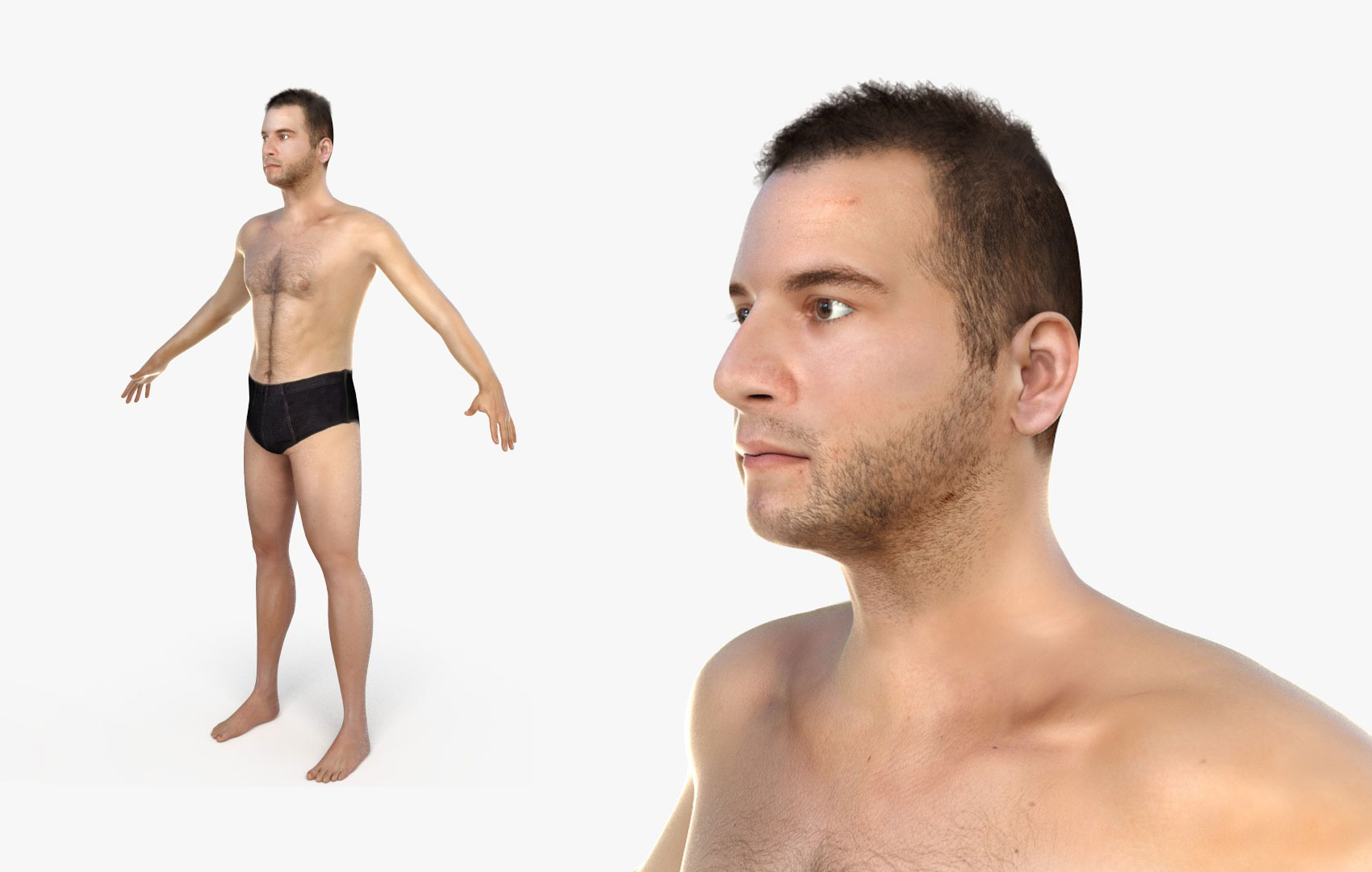
Unreal has cinematic-level targets, so they did scan and retopologize characters to much higher standards, but I doubt that level of detail is necessary for Godot. The character in the image is around 8k polys, which I believe should be enough for average/general character needs. However, some users may need something very different, such as 200-vertex characters.
I don’t want to work through LODs for now, so I may need to lock the vertex count at a practical baseline. My plan is to use blend shapes to customize the body and face, then collapse the final character mesh so it is optimized enough to be playable.
Unfortunately, that is exactly the case. I’ve been forced to give up game development because it doesn’t generate even a minimal income. As far as I know, people have used my tutorial, but it hasn’t brought me anything (other than moral satisfaction).
Right now I’m having problems with my WS, and I don’t have the financial means to fix them.
Medical data was used in the development of MakeHuman. So the model meshes there are accurate.
I think rather than an asset generation tool, a lot of devs would be interested in a humanoid character template or baseline to start from.
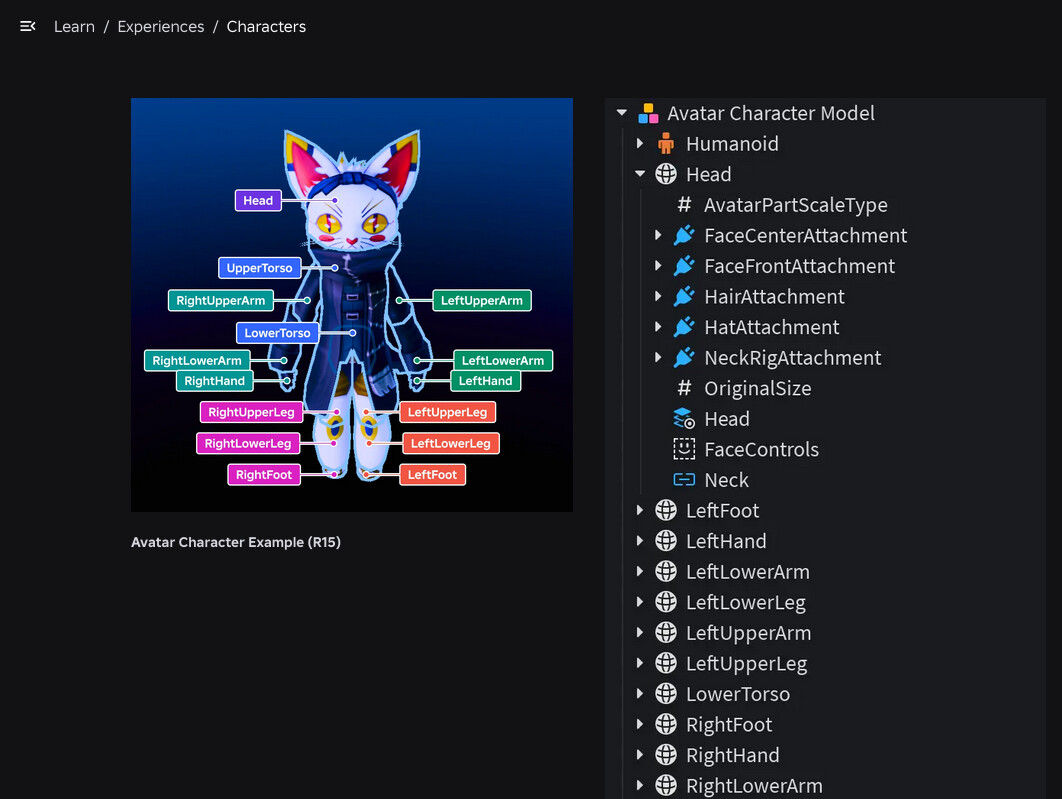
I’m particularly fond of roblox’s Avatar Character (programming) model.
They set ground rules going “this is an avatar. avatars can use face animations. avatars have these limbs avatars have this thing, they don’t have that thing.”
The main benefit in pursuing this would be to cultivate a character specification like on gmod or vrchat, making such assets closer to drag-and-drop on different projects. Hell, even on blender i’ve seen authors implicitly adopt the same bone names, face expression shape keys, pose driver UI elements (as in: outfit choice, eye color button, face control visibility, etc.). Often they don’t even voluntarily follow a spec, all the stuff just happened to be in there on the template model they started from or on rigify’s viewport controls and UI.
We already have a good start with the retargetting system that renames limbs on skeleton3D to canonical names that animation libraries can reference in their keyframes. Perhaps setting more of these sane defaults will lower the friction in getting a humanoid character in working state on a game or project.