Coping with our responsibility as game designers on players wellbeing

Funny, I cant stand Pokemon either. Pokemon in a nutshell is literally a cheap rip off of Dragon Quest V, but removed from it the story, human cast, main antagonist, and everything else meaningful but monster catching, and then that be watered down to 25% its original state.

I could rant forever on it I suppose. And actually with that in mind, the cellphone VR pokemons are particularly annoying to me, " *If you jump off this cliff here, theres a Mewtwo or something, so go down anddddd catch itt!!1111".

That is probably with most guys, full disclosure. . . . . .

Actually, being more specific, those who came before us had much knowledge on what herbs were toxic v.s. which ones were medicinal or nutritious, etc.
And it isnt like they diddnt eat fish, vegetables, fruits of numerous kinds, and nuts,
Really speaking, if burgers are like the modern games, then the old stuff was healthier by a long shot, however, with the cutting the sauces and sugars, etc. it could be almost equal to what used to be.

OK I actually have to disagree, I would rather eat literally any kind of unprocessed food or thing that has little to no processing, this is another thing that somewhat prevents me from understanding the point meant here, apologies.

Another point to touch, people will do what they will, if you sell someone a pineapple and they leave it out till it molds, then eat it, it isnt the seller’s liability that they ate a moldy fruit and got sick.

Really several good points have been touched here, but generally I would find a lot of it to be common knowledge.

1 Like

I don’t think that @flamenco687 is overthinking it, a lot of big and mid budget studios will try make games that take longer, even though they could be more condensed. Honestly I’ll try to buy games that take less time in the future.

Trying to stretch a game’s play time can be seen as unethical since players might spend their time doing something they didn’t wanted to do to finish the story, to complete to 100% or just to avoid leaving the game unfinished.

Like you need to spend 106 hours to beat assassin’s creed valhalla, which is insane.

I know, you are selling games to adults, so how much time they spend on your game shouldn’t be your responsibility (you’re not selling crack after all). But some mental disorders makes it hard to handle addictions (like adhd for example). I think people that make games should try to make more condensed experiences (in big studios there is probably playtime quotas though).

howlongtobeat.com seems like a great resource to know how much a game is going to take from your life.

I kinda regret my time playing assassin’s creed odyssey, that game is beautiful but omg I could have put my time to better use.

1 Like

Funny take! I mean, yeah, if you gotta choose a vice, choose a… good one? I guess. But this should be an analysis in isolation of how games can be improved, regardless of how screwed others are.

Ideally, detract from bad habits or limit them.

Definitely. But for me it’s like seat belts. Safety requirements might be overestimating their role in most cases. People either drive well or are completely mad. However, good drivers can make mistakes and then seat belts will become life savers.

The analogy is that everybody might be well off without safety measures, except those who play for thousands of hours and are beyond a saving point. But, “good” players can have slip offs. They may feel down for something that has happened in life. It’s at their most vulnerable point that you should not exploit but prevent them from falling further under the claws of your entertainment machine.

That’s a really great way to put it. I think there’s an issue in games that market themselves as a life experiences. Star Citizen, WoW, Foxhole… should not convince anyone that’s all they’ve got. I do not want to say the MMO genre is implicitly unethical but it definitely contributes greatly to the issue.

Processed is a tricky term, better to talk about “ultraprocessed” as the bad food. Processed food is really any food that touches a skillet or gets in the oven. A real burger meat is just the normal, natural, unprocessed meat shredded mechanically and put together in a specific shape. If you put it together with some other ingredients that wouldn’t be as palatable by separate you get a fun way of eating a balanced dish (carbs bread, protein meat and cheese , fiber and vitamins: lettuce, tomato, onion).

That’s what I was referring. It’s not necessary to make life boring for it to still be more than its raw form. We’ve come a long way from those times of painting on walls but we don’t have to sugar coat things if that’s going to harm us. A great, “full” game can be enjoyed without embalming it in over-saturated effects, gambling and hyper sexualization.

I do think there’s common knowledge in recognizing bad practice from neutral one. Because we are players still and get infuriated by games abusing us and our wallet. What I would like to discuss more and have not seen a push for is more active measures.

Like safety tests vs driving assistance. It’s the first step to not let people ride on a bullet without at least strapping themselves a bit and making sure the body does not disassemble as you accelerate. Then, if you can also DO something about it, like try and stop the car if it detects it’s about to crash, why not? Active measures will always come after and be harder to implement than “passive” measures (which is just not doing the bad things), but we should still consider them.

Exactly.

My concern as for the “coping” part of the title is that not only we’re not considering active safety measures but, in my opinion, we innocently develop the toxic mentality of wanting to make it harder for people to stick away from a game.

I think a reflection of this is how indies often aim for highly repetitive genres and designs that can stretch the playtime players get from it and thus have higher chance of succeeding commercially. I understand but it’s hypocrite to critique AAAs and follow their scheme, no matter how many more resources they have.

And let me say this is a really revealing point. I had to mention that I have background on developing games geared for kids. At some point I had a rant and wanted to make something heavier for adults. In any case, it seems like that part of caring for the kids as still stuck with me and I have come to believe that dealing with adults is different but not necessarily better than with kids.

The mentions to accessibility are also important. I have paid careful attention to many accessibility issues that are even hard to conceptualize sometimes like motion sickness, adhd as mentioned or ptsd. I feel like all of the things squishing people’s reward systems are prone to messing with people that have different accessibility needs. And that’s not something I like.

In general, this is what it kind of boil downs to. Still, there’s that whole front of active measures that I would love to discuss. How time-gating, warnings, clever design and meta features can help more explicitly.

1 Like

I feel like this was taken out of context quite a bit;

little to no processing would indeed be a skillet, homemade cooking, etc.
and being entirely honest here ultra processed and more processed than necessary are also different terms here, I like what is necessary and only a bit more other than that if more,

What I was saying is, much of the games made modernly are in the point of overprocessed or more than necessary; and i will say that there isnt anything we can do about gambling and hyper sexualization, I personally find there to not be much more to cover without going in circles here,

I would say that most games are better without the extra fluff. In perspective, what would you rather eat? A fruit salad, or a super greasy deep fried bowl of chicken nuggets with a side of fries with ketchup? Well, either which one you choose, which one will you feel better from eating afterwards? I would say the former for most individuals.
And again, the unprocessed or little to no processing is good with less effort and little to no unhealthy items.

People who want what is unhealthy will search for it, so again, as long as you dont make a gambling sim + daily porn game with online play as a monthly subscription, or something the like similar, I would say there are literally no ethical concerns.

I do not get infuriated by anything, there are several reasons for this: my calm disposition, the fact that i dont get interested too often, the fact that i read reviews and other opinions to decide if something is worth my time and money which is time^2;

I really dont think there is that much of a lack of common sense in the Indie game industry, I cannot see anything that could happen even if several of us did make that push.
All of the people who would even be interested would already not be in the “wrong side”, not to say that either side is good or bad, it is literally a manner of oppinions.

Actually, active measures, depending on what you mean, could very much so be impossible.
Those of us in the game dev industry who dont make gambling sims, porn games, etc. would most likely not even see a reason to push anyways.

I still do not see any logical reasons to use so much time and effort on attempting to change what other people make, it doesnt work like that.

In another analogy, the fish that dont swim into the net wont be caught, the ones that dont get caught will most likely be consumed by another predator; If people start a movement to stop the catching of a specific fish known to appear in nets, it doesnt stop people in other nations or predatory fish from consuming that kind of fish.

Really there isnt anything that can be done.

I somewhat disagree. If you want to fill a game with sidequests, it will take the dev longer to do, and if someone doesnt want to play the mandatory boring quests, then they dont have to play the game.

You cant really control any of these outcomes, and I am just being realistic here, there is literally nothing that can be done.

I don’t think this is the right mentality to solve problems. If you don’t do the bad thing someone will do it then is not an excuse to do the bad thing. You certainly cannot control what people make out of a game but you can set expectations and intentions.

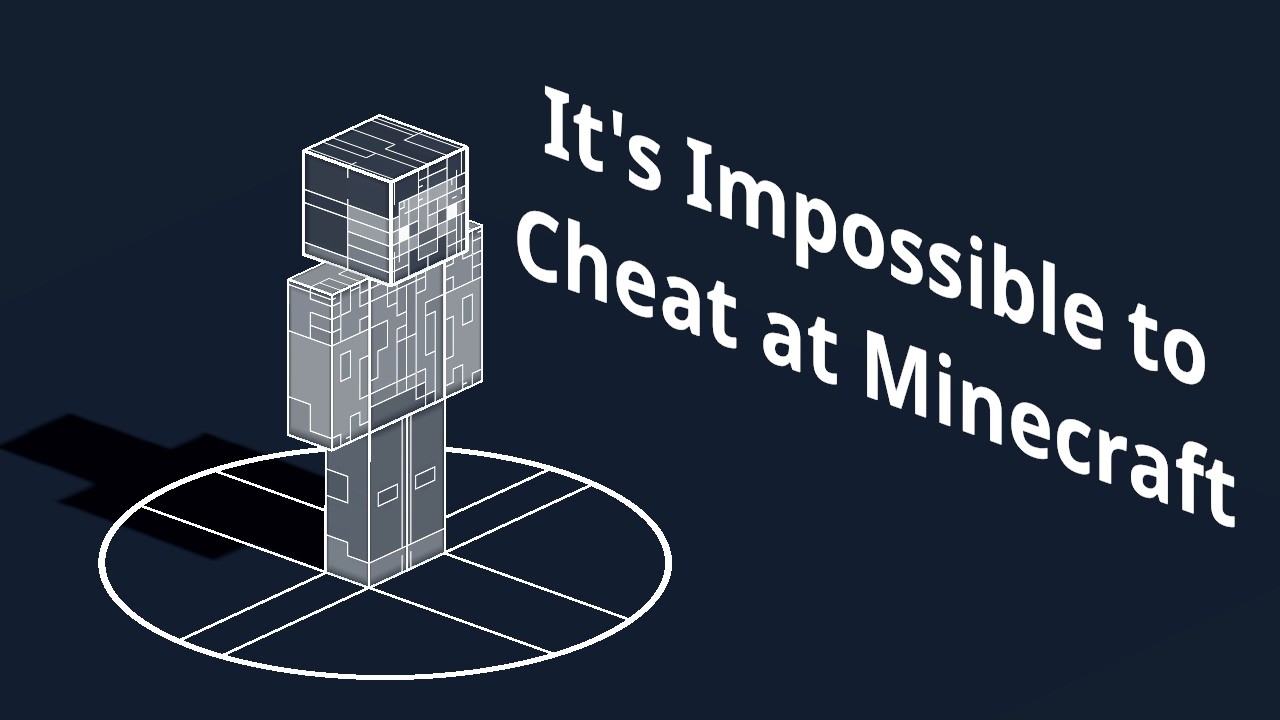
A great study case might be Minecraft. If you’re barely tuned in, the community and modding scene as adopted a more grandiose and adventuresque posture throughout half of the last decade. Arguably motivated by content creators and game design choices there’s been a push for completionism, speed running, competitiveness. Ultimately, a chase for progression.

This heavily detracts from the kind of game Minecraft used to be before Beta 1.8, aka: The Adventure Update. Hunger, sprinting, villages; eventually: the end, nether, hardcore, a boss, potions, item repairing… The mighty block sandbox about building funny creations turned into an RPG? If you can even call it that.

I recommend checking BTA, a modern revival of this ancient version. There are some features that feel so integral nowadays it’s hard to not miss them. Breeding animals and swimming come to mind. However, no matter how impossible it sounds, the presumption you go with into a game changes drastically how you experience it.

In the same light, I think creating games that clearly shout to the player “I want to care for you” or maybe just “I don’t want to harm you” is, no matter how silly it seems, a good first step at marking the expectations for the experience. We already do this for immersion, we want players to have some expectations which will influence shape how they feel about the world. We simply have to do the same with these more meta aspects of the design.

In any case

It’s been a surprise to see how differently shaped our views on this topic depending on our past experience. As I stated at the beginning, I already expected a heavy bias from the gaming and developer community towards favoring games. This conversation is wildly different with people not used or that don’t even engage with the medium.

It’s been a great exchange of ideas though. I definitely think I may be overthinking things a little, not that much however. But I would like to shine some final light on the topic with a specific example, that way it is more palpable.


PEAK is a recent co-op game in which you climb a procedurally generated mountain to reach the top. Now, the cool fact: the mountain is procedurally generated every 24h and is the same for everyone.

When I saw this game got viral and realized the daily reset counter the first time I booted it up, I was joyful. Regardless of the actual reason of this design choice, the impact for me is clear. Making the mountain, the whole point of the game, regenerate only once per day and for everyone is wonderful ethical design.

An average session of PEAK can last from 1 to 3 hours depending on if you reach the peak or not. Once you’ve reached the peak of the mountain… that’s it. There are not multiple mountains, a campaign or something like that. No real progression. The whole point is just have fun climbing a mountain once per day.

Sure, you could reach the top and play again, but it would be the same mountain. Want to do so? Fine. But that’s boring, I wouldn’t, most wouldn’t. I want a new mountain? We’re done for the day then, I’ll have to wait for the next one.

It’s one of the most natural and flexible ways of time-gating a player into playing the game for a healthy amount of time. If you’re desperate, you can play again. If you are a beginner and fail soon, you’ve failed soon, retry and get your revenge. Most importantly, it also does a fun thing which is creating a sense of community. There’s a whole league of people just tuning every day for how they’ve experienced differently the same mountain, every day.

Do you know what happens when you recur every day with other people? You form bonds, good. This also forms a habit, a daily habit: just the daily mountain, an hour or so and I’m done. Good. It’s not a daily reward system, you don’t have to tune in daily, you can also still play the same mountain if feel like doing a marathon. Just, enjoyment without compromise.

I think PEAK is quite close to being an extremely great example of an ethical game. It turns a hated feature by many, time-gating, into something fun.
1 Like

I have the perfect mentality for solving problems; high calculating speed and a lack of delusional mindset, also I am seriously confused at what is being said here;
If you do not do the thing, others will do it instead, and since you can only control yourself, there is not much you can do about other people’s behavior.

I for one cannot stand doing routines, habits are so fluctuating to me that i can never predict them,
I do not think you are getting that my entire point is, if you dont make unethical games, or what is considered unethical moreso, then you are not responsible for anything that happens due to those products that are considered unethical, no matter how you look at it.

The fact that I know very well that several people will never change and stating that,
is simply because I know human nature quite well; inevitably there isnt anything that can be done, and even if a movement happens, future generations will start the cycle over and over again.

###Nevertheless, dont let me stop you, your oppinion is yours.

2 Likes

I do wanna play more games that don’t try to take too much time, and peak feels like a great example of that. I think that warnings like “you played 3 hours, please consider taking a break” wouldn’t work though, as it would feel a little patronizing (and it could break the flow of the game).

I wouldn’t call all games that make people addicted unethical. Sure, if you add something to your game which is only designed to make people more “hooked” without making the game better, that’s bad. Some people spend 5 years of their lives playing lol or valorant to be the best, and they might reget that or they might not. I would never do something like that, but calling this game unethical only because it can take a lot of time might feel patronizing since this is basically saying “no, you shouldn’t be living your life playing this game for so long!” Pretty sure a lot of professional players don’t regret the decades they put in the same game, even if they were addicted.

1 Like

Hello!

I grew up playing console and mobile games. I had a limited selection of games to play, and I didn’t know how to modify them. I replayed the same games over and over again, each time trying out new ways to play or adding external challenges. One of these games was Ratchet & Clank (the reboot for PS4), I have played thorugh it over twenty times, each time challenging myself to use only one weapon. However, there was one part of the game I despised: The mandatory Clank puzzle sections, that couldn’t be skipped or sped up. It influenced what I value in a game a lot: replayability and customization.

I think that an ethical ethical game is a game that lets the player choose what to spend their time on, by either being a consistent package, or by offering decisions and optional content.

If a player has fun spending their time playing a game, it isn’t my job to restrict or to stop that. As a player, I wouldn’t want that to happen.

To me, games are like virtual vacations. It might be the same place each time, but it can be experienced differently each time. However, if I went on a vacation to do A, and I am forced to do B to do A, I would see it as a waste of time. For another example, I don’t like playing Terraria, because to progress, you need to spend time learning boss patterns. If I wanted to play a game about fighting bosses and learning patterns, I wouldn’t play Terraria, because to progress you also have to mine, grind and build.
Yes, not all games are like vacation, some are like books, such as Oneshot, which is designed to be played through ones.

My job as a game developer is to give the player options on what they could spend their time on, to create them that vacation location.

As a reply to your first post:

I had a similar experience earlier a while ago (could have been years, could have been months). I thought that I was making products that prevented people from living their lives, in other words: time wasters.

Then, I stopped thinking like that. I do not remember how. For a while, I stressed about the meaning of life, why we do things and that I needed to advance our society forward. Then, it suddenly stopped, like it was just a phase of angst.

In the present, I see games as what they are: hand crafted pieces of art with hundreds of hours behind them. If I enjoy experiencing them, whether it is building houses in Minecraft, that no one else other than me sees; spending dozens of hours trying to find a way to get past Iron Helga in my self inflicted Scrap Metal Heroes common/uncommon parts only run; or learning combos in DMC 5, does it matter? I decided I wanted to do that, and so I did, and I enjoyed myself. If I want to experience nature, I definitely can. I’m surrounded by forests and it’s my favourite pastime. However, games hold a special place in my heart, because they have the potential to be the most in-depth pieces of art people can make.

2 Likes

Society would certainly agree there and say people should be prevented from wasting time, shoot themselves to the moon. But the people who do waste time might simply opt out of reality and as Gamedev you give them the means to choose that path, for good or bad.

Who is this Society you mention and where can we find them to have a serious conversation?

Agreeing is a function of the human mind, not something that can be attributed to a word representing an aspect of a collection of people.

The word anthropomorphizing is being thrown around a lot here, I notice, and rightly so. It’s important to realize that when you say that “society has an opinion” you are actually anthropomorphizing a vague term as well. And you’re generalizing.

People use games for all sorts of reasons. My son and I have been watching somewhat responsible YouTubers play indie games with complex plots and speculate about the mythologizing people in fandom do. We also have been watching Theroux peer into the manosphere and learning about how WoW was used to weaponize the anger in lonely young boys.

Our conclusion: Big budget games with stunning graphics games are often extremely boring (though I really enjoyed Baldur’s Gate III).

So there is a phletora of reasons to keep developing games. Being responsible about it and reflecting on this topic is just a good idea imho.

In Dutch we have this extremely cringe saying, which was probably a political slogan way back: “De maatschappij, dat ben jij.” This translates to: “Society is you.”

Cringe though it may sound, there is truth in it: you are here representing society, so anything you pin on society is really just you.

If you claim society is really just the society in your country/state/district/culture, suddenly you are here representing that national/regional/cultural fiction. That’s a big responsibility.

1 Like

Lets say it like that: a company owner would certainly like it more if his staff be productive even in the free time, perhaps learning about the job.

While the Politicians would certainly like people to spend more time producing than wasting time pushing the “society” forward.

I am pretty sure this agenda makes it into media at many places too.

3 Likes

Certainly, but I don’t really see how that relates to maintaining games fair for people? Sure you give them options for their vacation but you wouldn’t give them “crack sniffing” as an option for vacation. I think there’s been a drift, maybe my fault, from my initial intent with this post and I see this reflected in the following replies.

Definitely. But again, this is not about productivity. I have already said it, this is not r/StopGaming. Games have to be useless, that’s kind of what makes them fun. I don’t call a job a game, even if it is fun, because it’s useful, efficient if you will. To expand on that, I recommend this video:

I think there’s a great difference between brain rotting and entertainment; in a sense, I feel like in one you’re conscious and in the other you’re not. My intent with this discussion is to shine light on the fact I think games are often treated as a numbing drug and thus, are victim to arguments like yours. This is about exposing games to a higher treatment.

Like this. Always lovely to hear about parent - son interactions relating games. All of that does not happen without some depth, when a game is soulless. Disclaimer! It does not have to do with the narrative aspect of videogames. Party games like Ultimate Chicken Horse can give foot to endless talks about how to improve this and that or why you’re making my life impossible.

It sure is a little bit hard to mark the lines between something in depth or not. Simple children/mobile games may offer a subpar challenge to adults and vice versa. We should acknowledge the importance of segregating game experiences but still I think there’s a great potential of layering experiences on top of each other. Minecraft is a game enjoyed by all ages, while a little generic. ABZU is a more nuanced example that offers an awesome experience both for kids and adults.

All of that is without recurring to cheap entertainment techniques that have shown to capture both kids and adults, like those seen in Roblox top charters. Childish aesthetic does not imply child as much as world depth does not imply adult. In this sense I have to discuss this:

I do agree with you for what’s the current panorama of AAA games but there’s definitely a case of subversion of expectations here. What I want to say is that this is not exclusive to AAA as much as it is more pronounced. They do have the resources to make something great and don’t. On the other hand, indies do often not have the resources to make something great and… don’t, most of the times.

What we praise as better gaming than AAA are the outliers of the indie scene. Most of it actually? Falls in the same pit. I have to again repeat that indies rely on repetitiveness and grinding core loops to make the experience worthwhile while lacking sufficient unique content. It might seem more understandable as they cannot afford to add more things in but it is nonetheless contributing to an abundance of games that feel like the other previous game.

You experience does not have to be grandiose to feel unique. A Short Hike remains a fairly unique game that does not feel repetitive despite the short duration. Actually, a strange and cool phenomenon happens in that, being such a short game composed of many unique interactions, it’s easy to miss them on a first run. Without the constraints of time, replaying it to catch on the missed things becomes easier and essentially you end up with a “not replayable” game that ends up having a lot of replayability.

Sometimes, missing on things can be fun, later.


At the end, I think it can already be seen by the rest of replies that I have acknowledged this topic is much more specific than I imagined. I do see how the ideology of the country, media and people that surround me may affect my view.

Again, this is not really about not… making games. We’re here for that. It’s about making something more careful with the people that play them. Epic hired psychologists to optimize their game for addiction. Clearly we don’t go to such extents. Because we can’t? It doesn’t sound so harmful to search for advice and guides on how to make games more fun. Where’s the line between gathering innocent advice and ill-intentioned one.

There’s a reflection to be done on numerous responses to my post and I think it’s a matter of fact people (and I’m generalizing, yes) are more willing to accept some bad than some good. It’s not we could do better but we could do worse what’s motivating some developers here to not see a necessity for change in how we expose players to our features.

In a similar light to Chat Control, which sounds like an unnecessary solution to an unnecessary problem, the solution is to educate people to not use wrongfully the internet. As @Luova_Labs put well, it’s about giving options, not taking them. But I guess we can also give the option to stay safe?

Immersion, yeah, that wellbeing pop-up will break your immersion. Look, in the same way the pop-up will not work for everyone, immersion won’t too. With all of the distractions we already have in our environment, I lean to think an occasional pop-up won’t be as significant. If only one person from a thousand gets up because of the warning, it’s already a win.

2 Likes

Sorry I completely forgot about the other replies, this is getting dense for me :sweat_smile:

Certainly. I share the laidback approach at life. Sometimes it’s better to just let be. I sure posed the issue in the first post as a much wider one and we’ve been narrowing it down through discussion. Not making an unethical game is key here but I express that there’s a potential to add onto that. I think we can make a game that actively tries in some ways to be more caring.

Again, the wellbeing disclaimers, creating great distinctions that allow players to not loose track of things in a bad way, maybe more tricky things like superfluous time gates. One that I haven’t mentioned is pacing. When playing through Valve’s games I have never felt tired. Not because I’m so “in the zone” I can keep pushing forward but because they give me time to rest between action and action. Remember:

I feel that pacing goes a long way to not make a game suck out your energy. When you are constantly given task after task as it happens in, I would dare to say, a majority of games, there’s no room for rest. Without rest, this hobby of yours to “disconnect” at the end of the day may even drain you more.

This relates somewhat to what I’ve said above. I didn’t mention PEAK’s daily feature as a way to create a routine more as an example of how to seamlessly create a “rest” window for players to not make them hate your game. Abiotic Factor (inspired by Half Life btw) was so good at first and sadly, I had to finish it with my last drops of energy. It constantly asked something from me, which is kind of what I’m greatly criticizing here about games.

And I see I’m not the only one.


I have already stated how I’m trying to stray away from entering into discussing MMOs and competitive games in this post, that’s murky water, really dirty. But yeah, overall, I do not regret my years of playing. But I do regret not having done something else in those years.

For a long time I was that person and there’s a question I posed myself with and hinted me at something greater:

If someone new you meet asks you: what do you do? What do you say? If games is the only answer, there’s a problem there. Sure, go and say you also work and fulfill chores, just as boring.

I don’t see the necessity of doing a hundred activities at the same time nor of not wanting to master one. But I don’t think it sounds healthy to only have one that outweighs the others. At best, it does not sound attractive, if that’s something someone prefers to care about.

1 Like

I was saying that players should be allowed to customize their experience within a game. Instead of making games fair for people, people should have the ability to make games fair for them.

I will apologize in advance if my response sounds a little heated. I wrote it quite quickly.

I’m pondering this question from the perspective of a person who wants to enjoy games the way they want to enjoy them. I want to be responsible of myself. If a game tells me I am playing too much, I am going to get angry. I do not need it to baby me. I bought the game. I am running it on my machine. I know how much time I am spending on it.

If I spend hours trying to achieve a self imposed challenge, and then the game tells me that “I have been playing for too long”, I am going to take it as a personal attack. Yeah, it would be smart not to, but I know myself well enough to know that I will, and when I do, I will push past my limits out of spite, even if at that point I am not having fun.

However, pop-ups are not a bad idea, but they should definitely be an optional setting that you can toggle on or off. (Which also ties into the whole “letting the player customize what they spend their time on.”)

3 Likes

I do like that, absolutely. Time-gating is a very hated feature that I don’t mind but I understand other people bypassing it. Just as controls, the intended ones are probably the best ones but you do you.

I see this as completely compatible then with the idea of showing up these toasts, no matter how personal they might feel. Those who want to will smash them down.

And don’t worry, I am worried everything on text sounds a little heated. We’re lacking our voices and laughs :grinning_face_with_smiling_eyes:

2 Likes