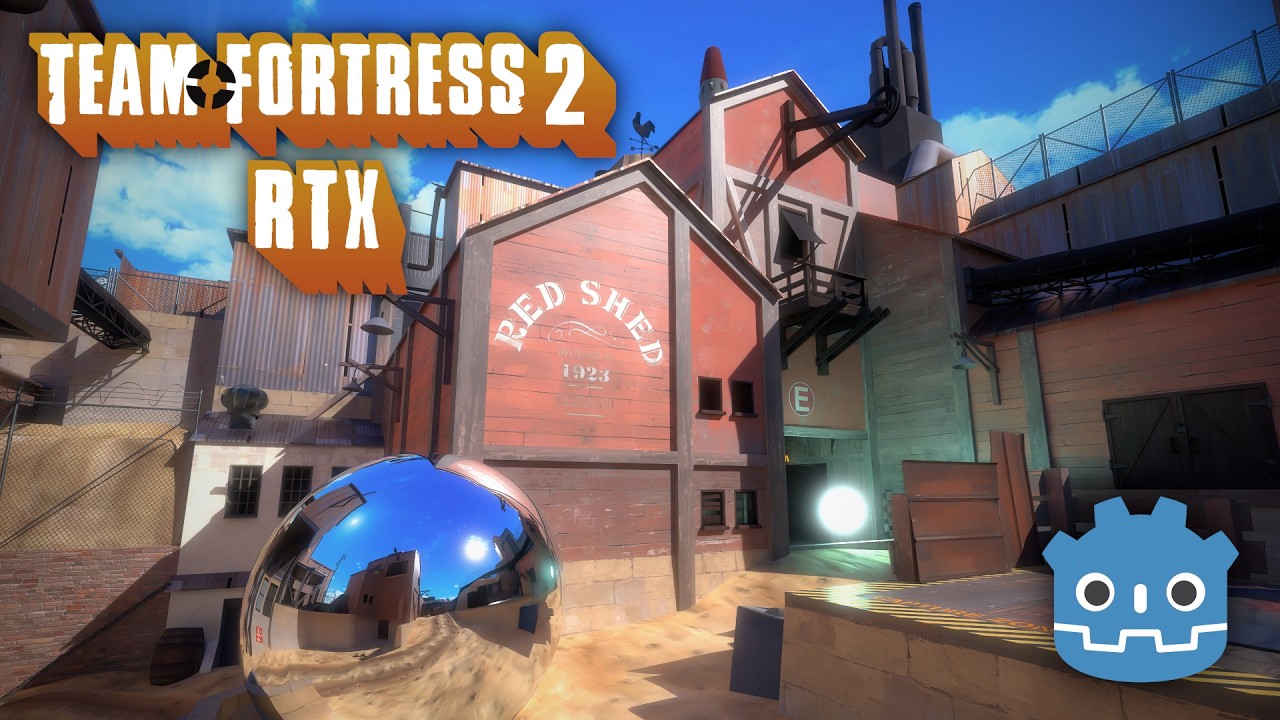
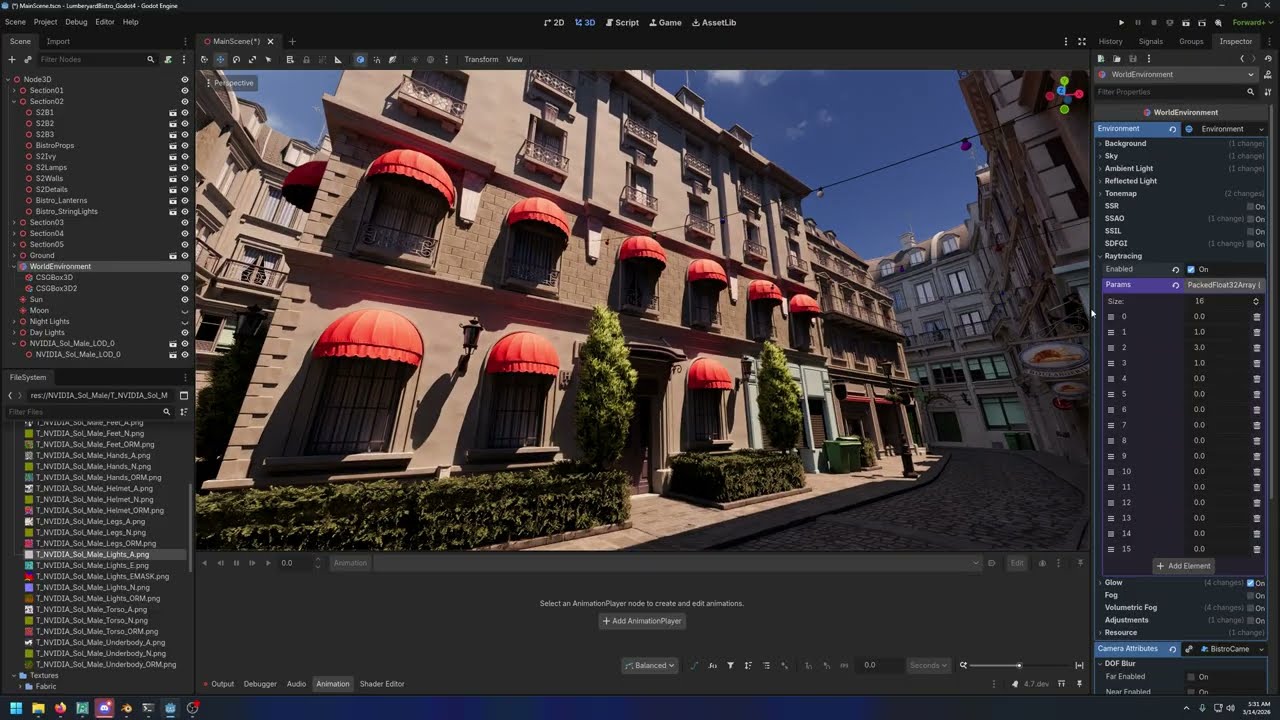
I have been playing with this for the last several days, and it’s massively impressive. I have also been talking with NVIDIA about this, and they intend to develop it to a production-ready state and open a PR to merge it back into Godot. NVIDIA has built the path-tracer itself as a fully GPU-agnostic system, meaning it is not limited to NVIDIA GPUs. At the moment, the denoiser is DLSS Ray Reconstruction, which is limited to NVIDIA, but they are actively working on a second denoiser specifically to support AMD and Intel.
I am working on some demonstration scenes now so people have some stuff to play with, so hopefully I have more to share soon. Here are two demos from the last several days.
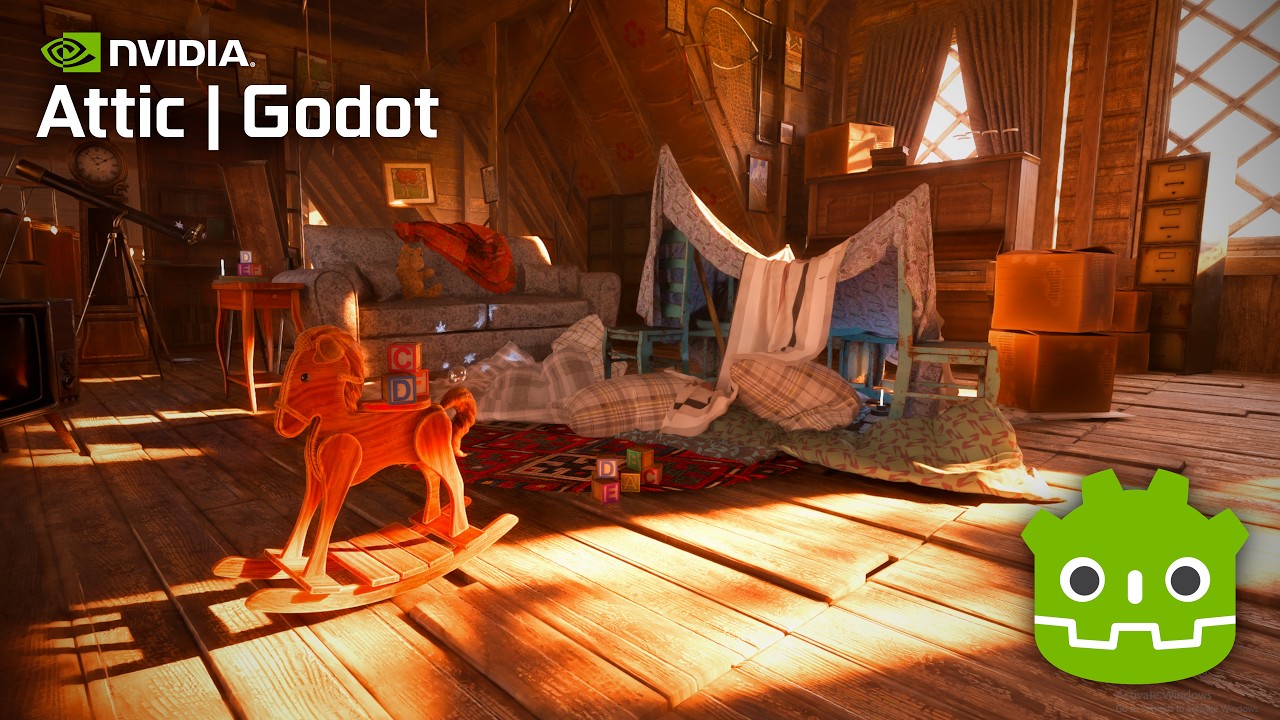
Hey everyone, I have another Path-Tracing demo project for you today. It’s the NVIDIA Attic scene, originally created to showcase Ray-Tracing in Unreal Engine 4. This has been fully and natively ported to Godot 4.7. I’ve used the geometry and scene layout from UE4 and replaced the materials with NVIDIA Omniverse PBR materials when available, as well as some custom materials when needed, which I believe makes this the most complete version of this scene, since all public versions have been missing either the layout and geometry or the PBR materials.
This is part of the same demo repository from before, so be sure to have SSH set up on your system before cloning, and I’ve also shared a video of the project in action.
Also, for those of you who struggle to compile Godot from source, I have uploaded the current builds on Itch.io for you. This includes the hyper-experiment Linux version as well.
Feedback is always appreciated, and this is still under active development it’s just all happening in the Godot contributor chat, which makes things impossible to find. So here’s the link if you’re interested in contributing or just looking at the behind-the-scenes work