Godot Version
4.6.2
Background
I’m currently working on my netcode rewrite for Monkanics. The next step in my plan is to create a STUN (Session Traversal Utilities for NAT) signal server using my now working relay server.
However, while I did get the UDPserver & PacketPeerUDP working, I did not account for TCP connections, their utility, and how to use TCPserver combined with StreamPeerTCP
I can use TCP and it’s built-in reliability for a foundational, stable connection and UDP for game logic transfer as a backup for the STUN server.
Question
How do I send packets back and forth using TCPserver and StreamPeerTCP?
For reference, here is the working UDP packet transfer code:
Server:
var Relay_Router_UDP : UDPServer
const MAX_PENDING_CONNECTIONS : int = 60
func _process(_delta: float) -> void:

	poll_udp_server()
func create_relay_servers() -> void:

	Relay_Router_UDP = UDPServer.new()

	Relay_Router_UDP.listen(RelayInfo.RELAY_ROUTER_PORT, RelayInfo.LOCALHOST_IPV4)

	Relay_Router_UDP.max_pending_connections = MAX_PENDING_CONNECTIONS
func poll_udp_server() -> void:

	Relay_Router_UDP.poll()

	if Relay_Router_UDP.is_connection_available():

		var Connecting_Client := Relay_Router_UDP.take_connection()

		var Packet : Variant = Connecting_Client.get_packet()

		print("Accepted peer: %s:%s" % [Connecting_Client.get_packet_ip(), Connecting_Client.get_packet_port()])

		print("Received data: %s" % [Packet.get_string_from_utf8()])

		# Reply so it knows we received the message.
		send_udp_packet_to_relay_client(Connecting_Client, Packet)

func send_udp_packet_to_relay_client(Client:Variant, Packet:Variant) -> void:

	Client.put_packet(Packet)
Client:
var Relay_Client_UDP : PacketPeerUDP
func _process(_delta: float) -> void:

	send_udp_packet_to_relay_server()

	receive_udp_packet_from_relay_server()
func initialize_relay_client() -> void:

	Relay_Client_UDP = PacketPeerUDP.new()

	Relay_Client_UDP.bind(RelayInfo.RELAY_ROUTER_PORT)

	Relay_Client_UDP.connect_to_host(RelayInfo.LOCALHOST_IPV4, RelayInfo.RELAY_ROUTER_PORT)
func send_udp_packet_to_relay_server() -> void:

	Relay_Client_UDP.put_packet("Message Sent".to_utf8_buffer())

func receive_udp_packet_from_relay_server() -> void:

	if Relay_Client_UDP.get_available_packet_count() > 0:
		var array_bytes : Variant = Relay_Client_UDP.get_packet()
		var packet_string : Variant = array_bytes.get_string_from_ascii()
		print("Received message: ", packet_string)
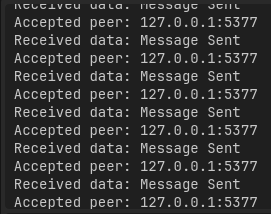
Result:
(Localhost was used as an example, but this exact code works for the relay server’s ip, which is called the relay router for flavor)
How do I achieve the same thing with the TCP classes?
BTW, TCPserver doesn’t have a connection example in the documentation like UDPserver does. Which I find really odd.
Any help would be appreciated!
Also, I feel like these 2 would have a better idea of what I’m on about.
@pennyloafers @gertkeno
