Me when I clip out of bounds again by just flying in a doorway
:'D
1 Like
The official dead screen of Godot!
1 Like
Happy early Arbor Day!
I’ve decided that the next thing I need to work on is rooms so I started putting together some art for the trees that will spawn in the first level of the game. This unfortunately meant that I had to touch the dreaded BLENDER. Blender was the reason why I quit my first 3D game actually, because I didn’t have the skills in 3D to back up what I wanted to make. Now that I’m a better programmer and know the game I want to make, I need to learn the art aspect of it. I watched some of Blender’s own tutorials on how to get started then a quick tutorial on how to make a tree and now I have some rough trees that will spawn randomly to create some variation in the rooms.
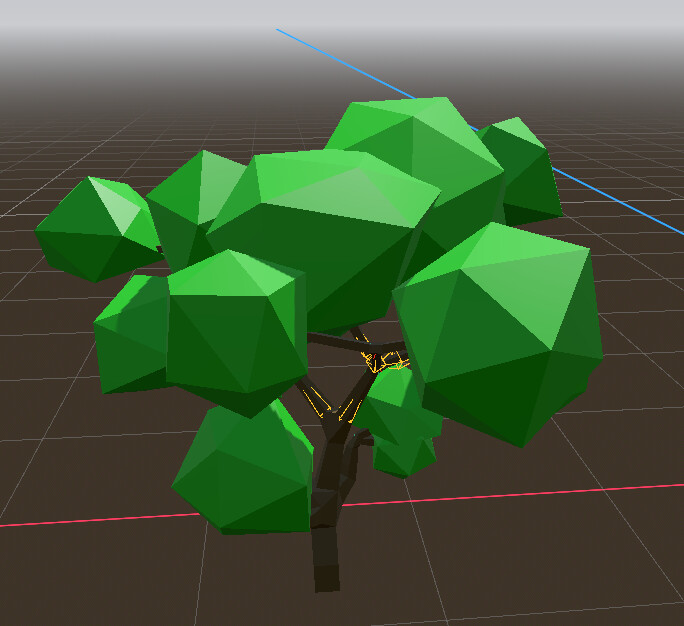
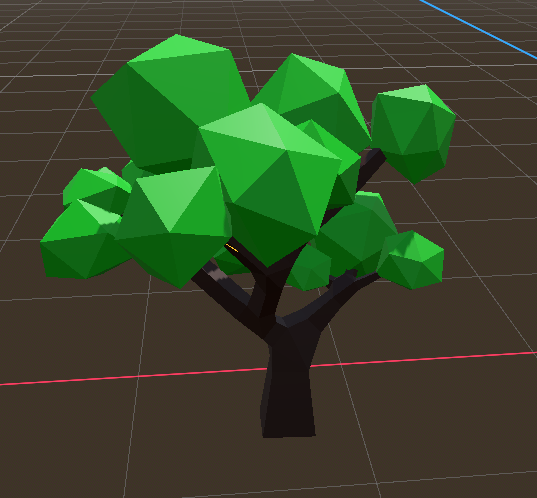
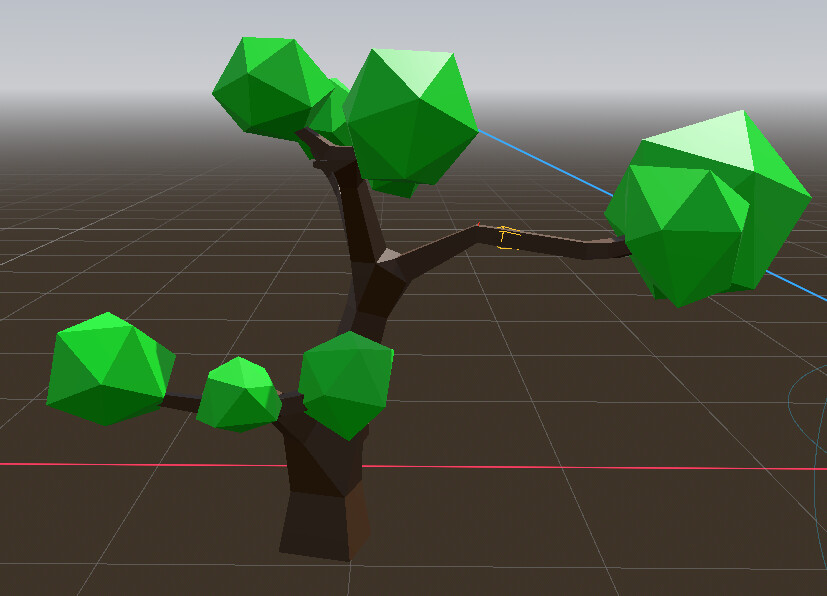
Ignore the random bit of a collision in the corner, I’m definitely not taking these screenshots in the scene for one of my enemies.
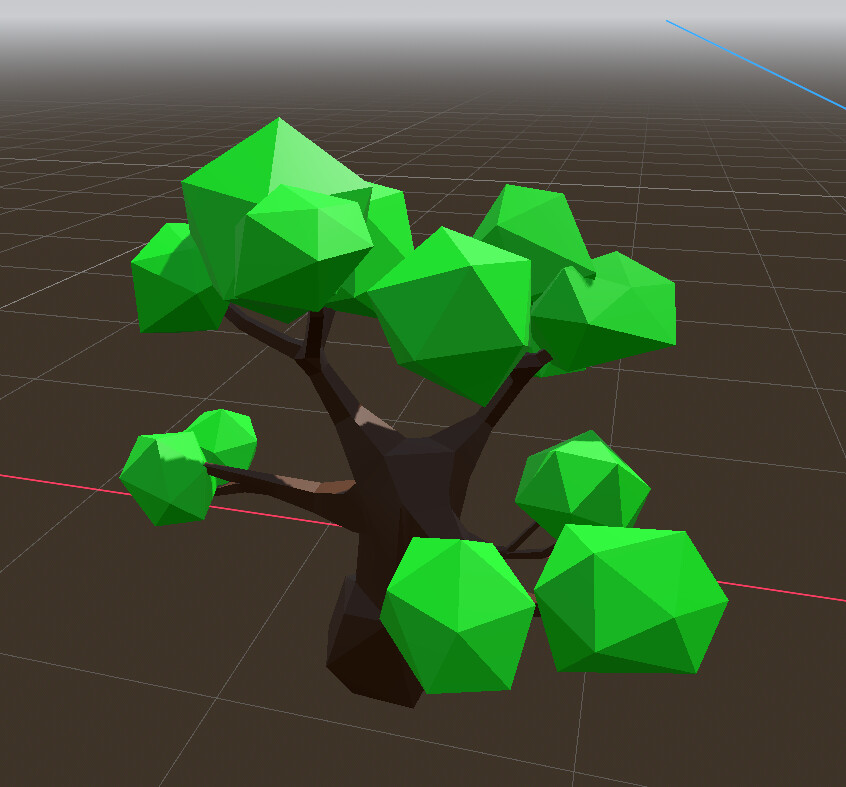
4 Likes
Nice 
If you dislike 3D modelling software (which I can wholeheartedly understand), have you considered making procedurally built 3D models within Godot? Depends on the fidelity you want of course.
3 Likes
Sorry, I was working on other things for a bit. What do you mean by making models in Godot/what is the workflow for that? That seems interesting.
Trenchbroom and Moss!
Back around the start of the project this was originally going to be a Speedrun game using MMP. I installed trench broom and Func_Godot (Dang, Why is it so difficult to set it up!) but I figured that wasn’t the way I wanted to take this project so it got disabled and ended up on the back-burner. Now that it’s a procedural rogue-lite I needed some way of creating rooms.

I had to bring back Func Godot. Since it was a new version of Godot and was a while since I set it up I figured I should do that again. Yay me, I had to create a couple of config files and deal with careful file placements. It’s going to be so fun having all the materials for my ground in one folder :'D
As much as I complain, this plugin is so great since I don’t want to touch that vile (yet really useful, I just don’t know how to use it) software called shudders
BLENDER
The actual map making in Trenchbroom is… I don’t know how to describe it. Most of it is very good and intuitive yet somethings bug me. E.G: using right-click fly through mode like in Godot, you use Q to ascend yet E doesn’t descend you since that’s a different keybind.
Anywhoo…
I don’t find any problem with these issues since I’m going to work more and live with it. Besides, it’s probably some setting I can find.
Actual talk about moss!
After setting up Func_Godot and getting a basic brick texture in for the rooms I figured the next logical step was making a starter room
Huh, That was weird. Maybe it should be something else
Getting a basic room with the random spawning elements like trees
Making moss! That’s what I should do!
I converted the standard material for the brick texture to a shader so I could apply a (slightly bluish) green cellular noise texture to it. I got it looking like this which I’m happy with:
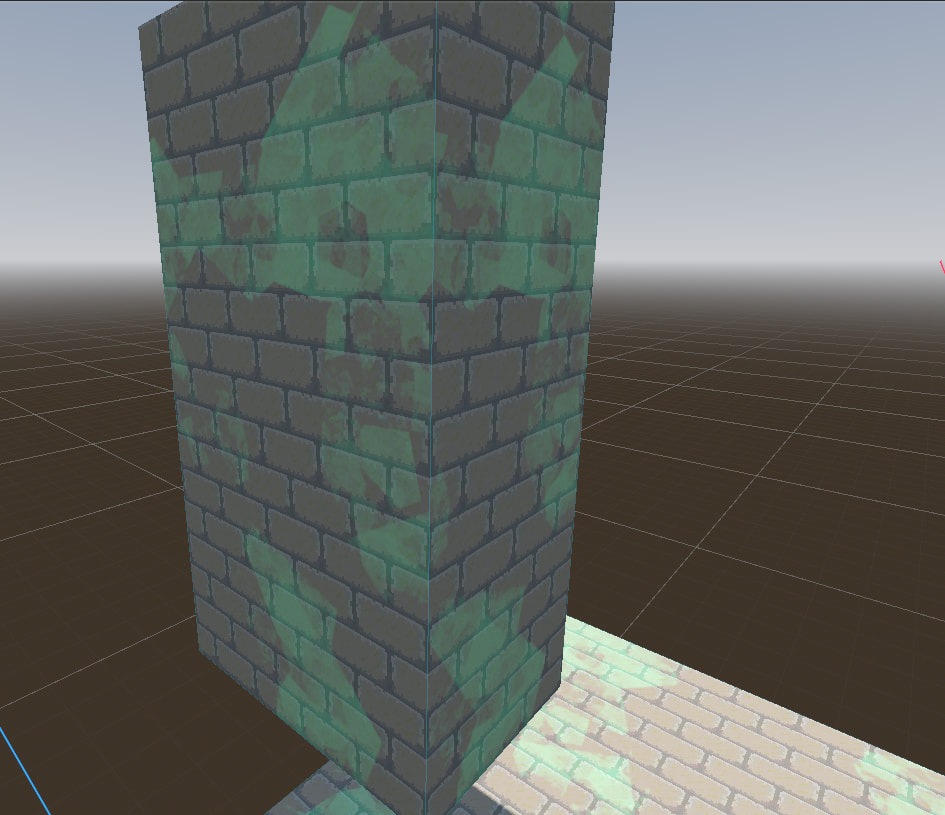
I chose the more unrealistic Cell Value cellular noise since It fit the glitchy technical vibe I’m going for with the game.
Video Release Date: Junuary 93, 18777
1 Like
I haven’t done so myself, but you can use Godot’s SurfaceTool to create geometry from scratch. Alternatively you could merge imported parts of 3D models (ie trunks, branches, foliage > tree), or even make reusable instances of (groups of) primitives.
I only suggested it since you mentioned you don’t like 3D modelling software - you won’t get the same fidelity by doing it procedurally, and animating it will probably be harder, but it would allow you to make decisions from code (ie trees grow taller the closer they are to X). Just a thought
2 Likes
Torches and More Desmos!
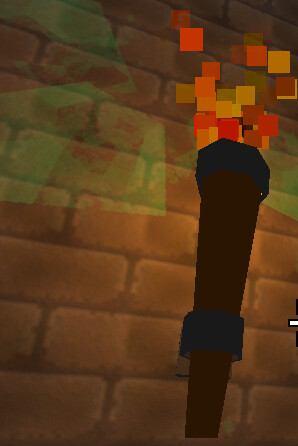
Yesterday I didn’t work on the game because I was making Flan but today I did work on the game so I made a torch in the dreaded
Blender
then I used some particles for fire and an OmniLight so it can light up the room
I also made another Desmos graph for linear and quadratic decay. I’m thinking of using this for things like making wind charges not a binary move or no move but the further away you are from the point of impact the less you are pushed by it.
This is the graph
:D
2 Likes
Pixel Art?
Today I worked on using a brainstorm of the first level and creating props and things that will go there. The idea is something like the entrance to the The Ocarina of Time’s forest temple.
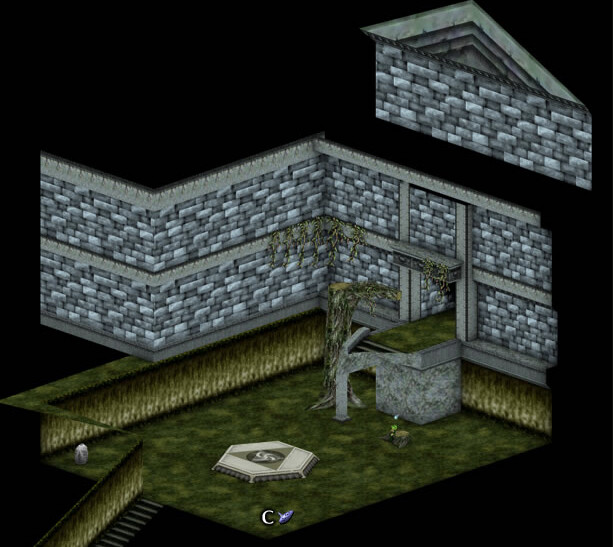
I created a simple door in
BLENDER
then created a vine texture to go on top of it. These vines require 3 slashes in order to open to hopefully function as a check to make sure people know how to attack before actually playing the game. How I created that vine texture is the interesting part that I’m going to talk about though.
It started with creating a model in
BLENDER
that was a few vertexes with a skin and smooth shading then a base color which looks like this:
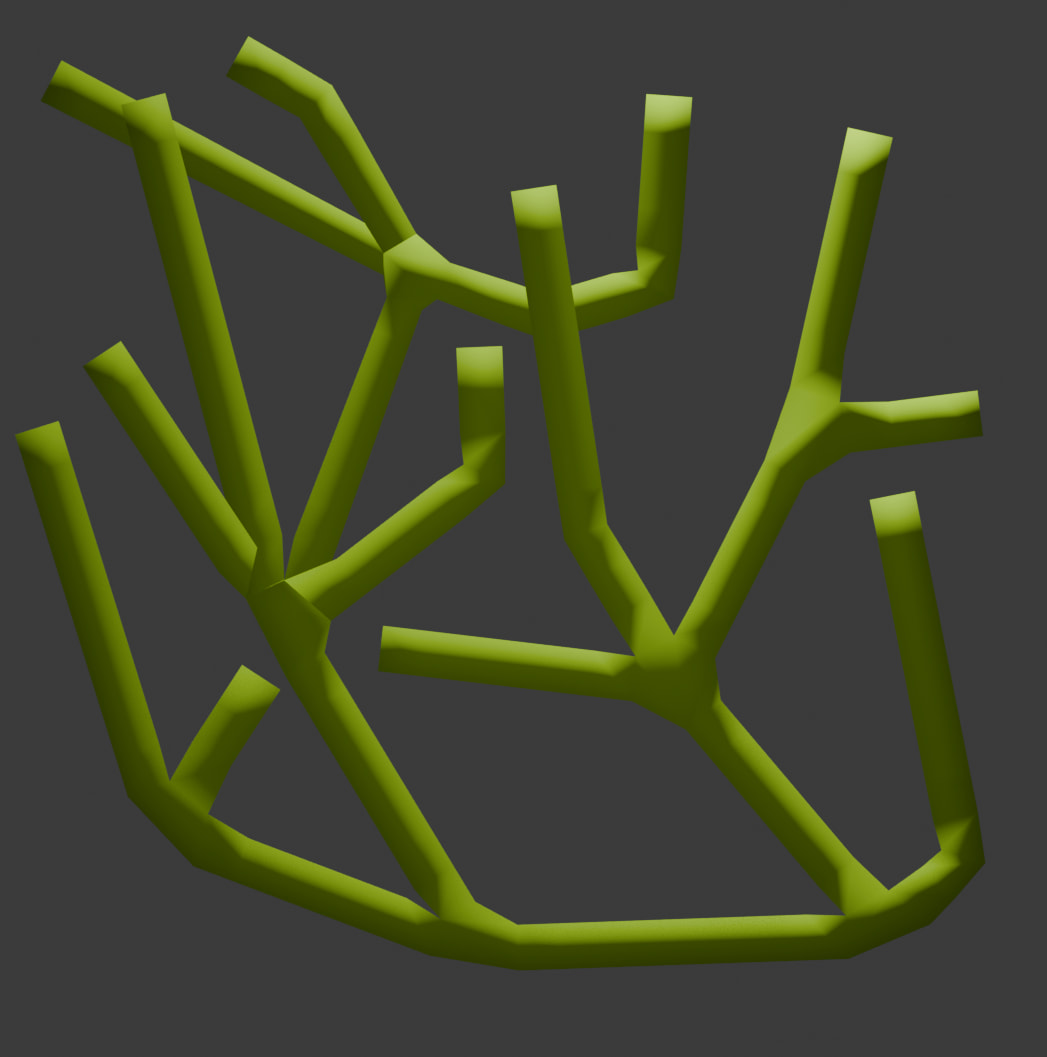
Then I took that screen shot and scaled it down in Krita to create a low resolution look kind of like the N64 Which looks like this:

Then I set the filter to linear to make it look
(@thesnesmaster will probably be offended by my pixel art techniques :/)
3 Likes
Lol, actually this is basically what the devs of Donkey Kong Country for the SNES did,
literally what they did. Right in the early 3d era too 
After developing Nintendo Entertainment System games in the 1980s, Rare, a British studio founded by Tim and Chris Stamper, purchased Silicon Graphics workstations to render 3D models. Nintendo sought a game to compete with Sega’s Aladdin (1993) and commissioned Rare to reboot the dormant Donkey Kong franchise. Rare assembled 12 developers to work on Donkey Kong Country over 18 months. Donkey Kong Country was inspired by the Super Mario series and was one of the first home console games to feature pre-rendered graphics, achieved through a compression technique that converted 3D models into SNES sprites with little loss of detail. It was the first Donkey Kong game neither produced nor directed by the franchise’s creator, Shigeru Miyamoto, though he contributed design ideas. —Wikipedia
Donkey Kong Country - Wikipedia
2 Likes
Just checked back in and damn. Making good progress.
Keep it up.

4 Likes