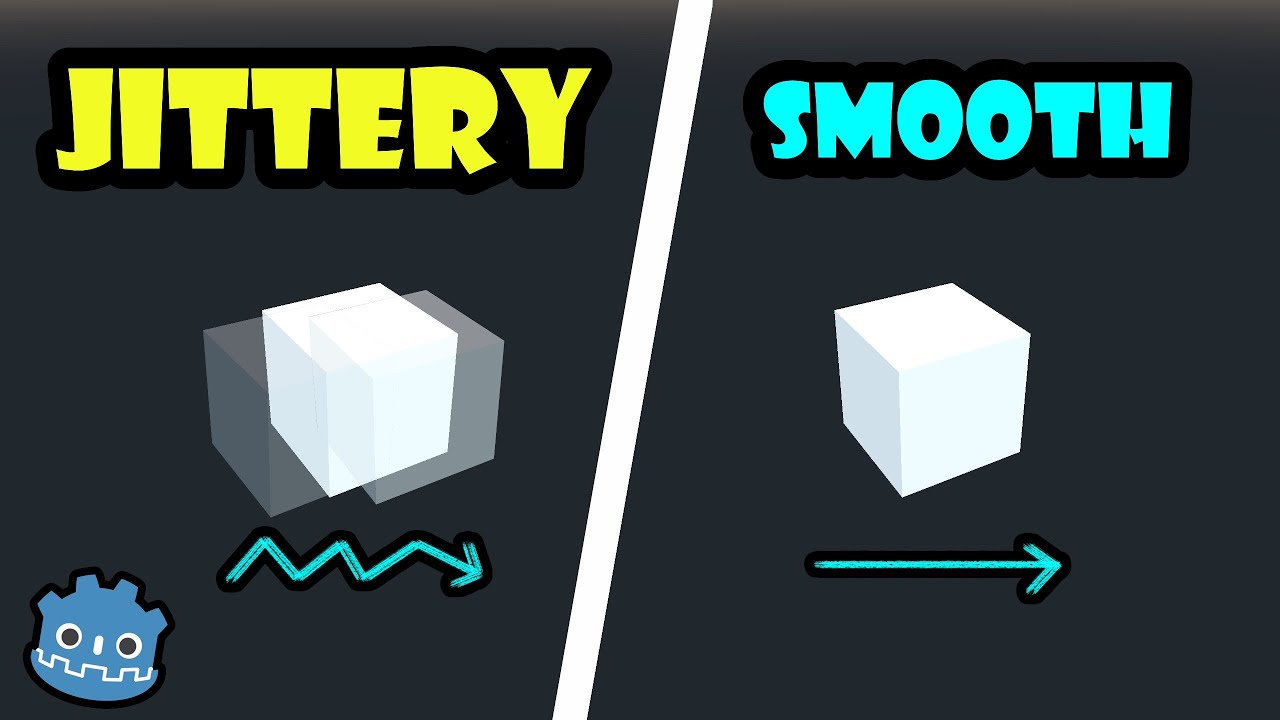
Makes sense, hopefully this code helps:
CharacterBody3D:
extends CharacterBody3D

@export var move_speed := 6.8
@export var rotation_speed := 8.6
@export var gravity := 0.0
@export var deceleration := 36.0  # higher = shorter slide

const Z_COMP := sqrt(2.0)

# our “north star” yaw for the box
var desired_yaw: float

func _ready():
	# start off facing however the box is rotated in the editor
	desired_yaw = $Box4.rotation.y

func _input(event):
	# only catch key-presses for our movement actions
	if event is InputEventKey and event.pressed:
		for action in ["move_left","move_right","move_down","move_up"]:
			if event.is_action(action):
				_update_desired_yaw()
				break

func _update_desired_yaw():
	# calculate the current input vector & camera-flattened dir
	var iv = Input.get_vector("move_left","move_right","move_down","move_up")
	if iv == Vector2.ZERO:
		return  # no movement
	var cr = $"../../SubViewport/CameraRig/Camera3D".global_transform.basis.x
	var cf = -$"../../SubViewport/CameraRig/Camera3D".global_transform.basis.z
	cr.y = 0; cr = cr.normalized()
	cf.y = 0; cf = cf.normalized()

	# stretch forward before normalizing for your √2 world-scale
	var raw = cr * iv.x + cf * (iv.y * Z_COMP)
	var d   = raw.normalized()
	desired_yaw = atan2(d.x, d.z)

func _physics_process(delta):
	# — velocity XZ —
	var iv = Input.get_vector("move_left","move_right","move_down","move_up")
	if iv != Vector2.ZERO:
		# build dir & apply full-speed immediately
		var cr = $"../../SubViewport/CameraRig/Camera3D".global_transform.basis.x
		var cf = -$"../../SubViewport/CameraRig/Camera3D".global_transform.basis.z
		cr.y = 0; cr = cr.normalized()
		cf.y = 0; cf = cf.normalized()

		var raw = cr * iv.x + cf * (iv.y * Z_COMP)
		var d   = raw.normalized()
		velocity.x = d.x * move_speed
		velocity.z = d.z * move_speed * Z_COMP
	else:
		# brake evenly
		velocity.x = move_toward(velocity.x, 0, deceleration * delta)
		velocity.z = move_toward(velocity.z, 0, deceleration * delta)

	# — always lerp the box toward desired_yaw —
	var box = $Rogue
	var current = box.rotation.y
	var diff = wrapf(desired_yaw - current, -PI, PI)
	var step = rotation_speed * delta
	if abs(diff) <= step:
		box.rotation.y = desired_yaw
	else:
		box.rotation.y = lerp_angle(current, desired_yaw, step)

	# — gravity + slide —
	velocity.y -= gravity * delta
	move_and_slide()

	# — animation state —
	_update_animation_state()

func _update_animation_state():
	var sprite = $AnimatedSprite3D
	if not sprite:
		return

	var moving = abs(velocity.x) > 0.1 or abs(velocity.z) > 0.1
	# use GDScript’s ?: ternary, not Python’s if-else
	var want_anim = moving if "walk" else "idle"

	if sprite.animation != want_anim:
		sprite.animation = want_anim
		sprite.play()
CameraRig Node3D:
extends Node3D

@export var move_speed: float = 60.0    # How fast the camera rig position lerps towards player
@export_range(0, 50) var orbit_speed: float = 4.0
var _target_orbit := rotation.y

@export var circular_radius: float = 0.0
@export var circular_speed: float = 0.2
var _circ_angle: float = 0

@export var player: Node3D        # Assign your player node in the inspector

@onready var cam: Camera3D = $Camera3D


func _process(delta: float) -> void:
	if player:
		# Lerp the CameraRig's position towards the player
		global_position = global_position.lerp(player.global_position, 1.0 - exp(-move_speed * delta))

	rotation.y = lerpf(rotation.y, _target_orbit, 1.0 - exp(-orbit_speed * delta))
	if absf(rotation.y - _target_orbit) < 0.02:
		rotation.y = _target_orbit

	# Optional: move camera in a small circle around rig
	#_circ_angle -= TAU * circular_speed * delta
	#cam.position.x = cos(_circ_angle) * circular_radius
	#cam.position.y = sin(_circ_angle) * circular_radius
Camera3D:
class_name Camera3DTexelSnapped3
extends Camera3D

@export var snap := true
@export var snap_objects := true

var texel_error := Vector2.ZERO

@onready var _prev_rotation := global_rotation
@onready var _snap_space := global_transform
var _texel_size: float = 0.0

var _snap_nodes: Array[Node]
var _pre_snapped_positions: Array[Vector3]


func _ready() -> void:
	RenderingServer.frame_post_draw.connect(_snap_objects_revert)


func _process(_delta: float) -> void:
	# rotation changes the snap space
	if global_rotation != _prev_rotation:
		_prev_rotation = global_rotation
		_snap_space = global_transform
	_texel_size = size / float((get_viewport() as SubViewport).size.y)
	# camera position in snap space
	var snap_space_position := global_position * _snap_space
	# snap!
	var snapped_snap_space_position := snap_space_position.snapped(Vector3.ONE * _texel_size)
	# how much we snapped (in snap space)
	var snap_error := snapped_snap_space_position - snap_space_position
	if snap:
		# apply camera offset as to not affect the actual transform
		h_offset = snap_error.x
		v_offset = snap_error.y
		# error in screen texels (will be used later)
		texel_error = Vector2(snap_error.x, -snap_error.y) / _texel_size
		if snap_objects:
			_snap_objects.call_deferred()
	else:
		texel_error = Vector2.ZERO


func _snap_objects() -> void:
	_snap_nodes = get_tree().get_nodes_in_group("snap")
	_pre_snapped_positions.resize(_snap_nodes.size())
	for i in _snap_nodes.size():
		var node := _snap_nodes[i] as Node3D
		var pos := node.global_position
		_pre_snapped_positions[i] = pos
		var snap_space_pos := pos * _snap_space
		var snapped_snap_space_pos := snap_space_pos.snapped(Vector3(_texel_size, _texel_size, 0.0))
		node.global_position = _snap_space * snapped_snap_space_pos


func _snap_objects_revert() -> void:
	for i in _snap_nodes.size():
		(_snap_nodes[i] as Node3D).global_position = _pre_snapped_positions[i]
	_snap_nodes.clear()
Display Control:
extends Control

@export var viewport: SubViewport
@export var pixel_movement := true
@export var sub_pixel_movement_at_integer_scale := true

@onready var _sprite: Sprite2D = $Sprite2D


func _process(_delta: float) -> void:
	var screen_size := Vector2(get_window().size)
	# viewport size minus padding
	var game_size := Vector2(viewport.size - Vector2i(2, 2))
	var display_scale := screen_size / game_size
	# maintain aspect ratio
	var display_scale_min: float = minf(display_scale.x, display_scale.y)
	_sprite.scale = Vector2(display_scale_min, display_scale_min)
	# scale and center control node
	size = (_sprite.scale * game_size).round()
	position = ((screen_size - size) / 2).round()
	# smooth!
	if pixel_movement:
		var cam := viewport.get_camera_3d() as Camera3DTexelSnapped3
		var pixel_error: Vector2 = cam.texel_error * _sprite.scale
		_sprite.position = -_sprite.scale + pixel_error
		var is_integer_scale := display_scale == display_scale.floor()
		if is_integer_scale and not sub_pixel_movement_at_integer_scale:
			_sprite.position = _sprite.position.round()
Structure:
Node3D
|- Level
   |- CharacterBody3D
|- SubViewport
   |- CameraRig
       |- Camera3D
|- Display
   |- Sprite2D